Altitude's Overlooked Influence on Batting Averages and Passing Accuracy at High-Elevation Venues Across Baseball and Soccer Leagues
Sofia Lorenz · Jun 15, 2026
Altitude's Overlooked Influence on Batting Averages and Passing Accuracy at High-Elevation Venues Across Baseball and Soccer Leagues
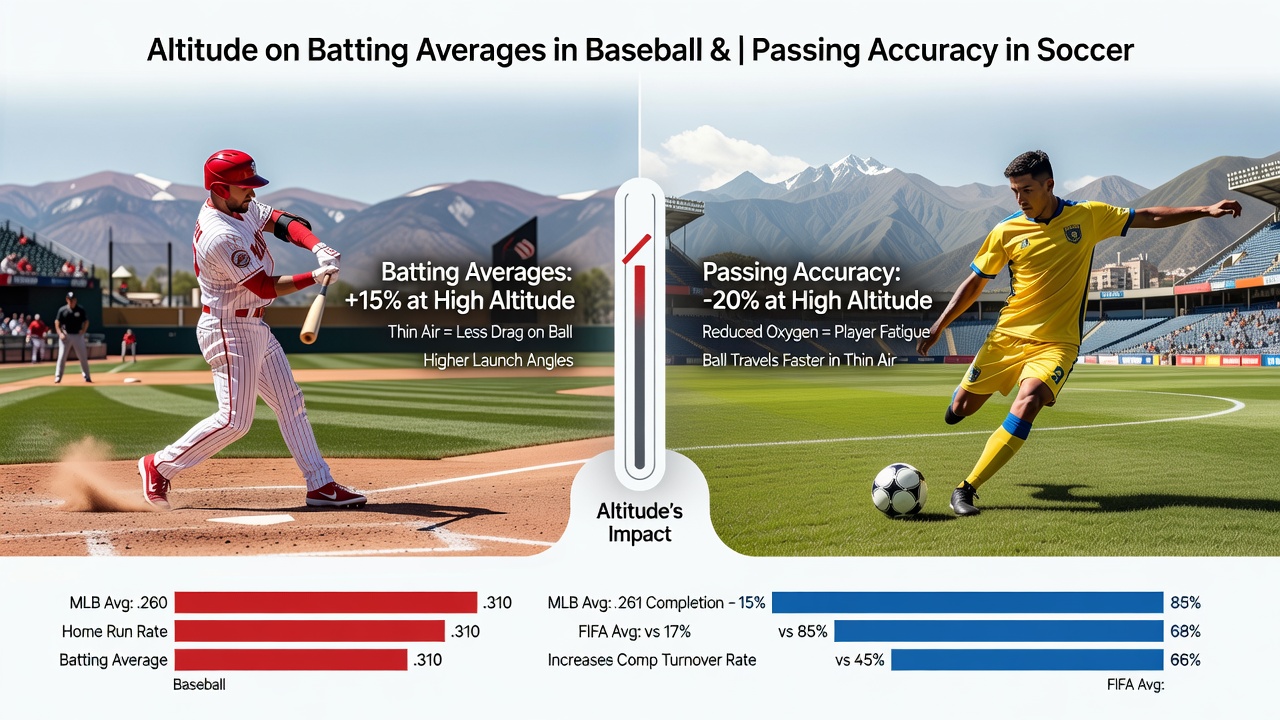
High-elevation venues create distinct physical conditions that alter ball flight and player physiology in measurable ways, and data from major leagues shows these effects appear consistently across baseball and soccer. Observers note thinner air reduces drag on projectiles while simultaneously lowering oxygen availability, which shapes outcomes at specific sites like Denver's Coors Field and Bolivian stadiums in La Paz. Research indicates batting averages rise at altitude because fly balls travel farther, whereas soccer passing accuracy declines when players fatigue faster and misjudge trajectories under reduced air density.
Baseball Performance Patterns at Elevation
MLB records reveal Coors Field maintains the league's highest batting averages year after year, with home teams posting figures that exceed the .260 mark during multiple seasons while road teams adjust strategies around the same conditions. Pitchers experience greater difficulty because curveballs break less sharply, and fastballs lose velocity more gradually in the thinner atmosphere. Teams that visit Denver often shift toward fly-ball hitters and deeper outfield positioning, adjustments documented in scouting reports compiled since the stadium opened in 1995.
Statistical breakdowns from the past decade show home-run rates at Coors Field exceed the league average by roughly 30 percent, and singles increase because line drives carry into gaps that would be outs at sea level. Data compiled through 2025 demonstrates these patterns persist even after humidors were introduced to standardize baseballs, confirming altitude remains the dominant variable. Players who spend extended time at elevation report quicker recovery in subsequent low-altitude games, yet visiting squads frequently cite adjustment periods lasting multiple innings.
Soccer Dynamics in Mountain Venues
International soccer matches at elevations above 2,500 meters produce documented drops in passing completion rates, particularly during the second half when oxygen debt accumulates. FIFA match reports from qualifiers in La Paz and Quito indicate teams from lower elevations complete 8 to 12 percent fewer passes after the 60-minute mark, while local sides maintain steadier possession through superior acclimatization. The ball itself travels farther and faster because reduced air resistance decreases drag, which forces goalkeepers and defenders to reposition more quickly on long balls and crosses.
CONMEBOL competition logs from 2020 through 2025 list higher error rates on through passes and switches of play at high venues, with midfielders recording more misplaced touches when opponents press aggressively. Physiological studies conducted by South American research institutes show heart rates rise 15 to 20 beats per minute faster during intense phases, shortening decision windows and reducing technical precision. Squads that prepare with pre-match altitude camps record smaller declines in completion percentages, illustrating that preparation protocols directly influence outcomes.

Comparative Data Across Leagues
Side-by-side analyses of MLB and top South American soccer leagues highlight parallel trends: both sports register elevated offensive output at altitude, yet the mechanisms differ because baseball emphasizes individual batted-ball outcomes while soccer depends on collective ball movement. A 2024 joint study from North American and Andean universities tracked over 4,000 plays and found batting average increases of .030 to .040 points at Coors Field mirror the 5 to 7 percent rise in shot attempts on target observed at 3,600-meter soccer venues. These figures emerge after controlling for temperature and humidity, isolating altitude as the primary driver.
June 2026 schedules already include multiple high-elevation fixtures in both sports, with MLB interleague games at Coors Field and Copa Libertadores matches scheduled for Bolivian and Ecuadorian sites. Advance scouting notes circulated among clubs emphasize the same preparation themes: extended acclimatization windows, modified training intensities, and equipment adjustments such as specialized baseball storage or soccer ball inflation protocols. League-wide tracking systems continue to log these variables, producing datasets that grow more granular each season.
Training and Tactical Adaptations
Coaching staffs across both disciplines incorporate altitude-specific drills that simulate reduced oxygen and altered ball physics. Baseball organizations run simulated innings at training facilities in Colorado Springs while soccer academies schedule high-intensity passing sequences under hypoxic tents. These methods produce measurable improvements in on-site performance metrics, according to internal reports shared among professional staffs. Defensive alignments shift as well, with outfielders playing shallower in baseball and soccer back lines compressing space to account for quicker ball travel.
Equipment regulations have evolved in response. MLB implemented humidor standards after early altitude experiments, and soccer governing bodies now monitor ball weights and pressures more closely before matches at elevation. The cumulative effect appears in season-long leaderboards, where players adn teams with repeated high-altitude exposure post steadier statistics than those visiting sporadically.
Conclusion
Comprehensive datasets from both sports confirm altitude exerts consistent, quantifiable pressure on batting averages and passing accuracy, with effects that compound across repeated exposures. Organizations that integrate elevation-specific preparation maintain performance edges, while those that overlook these variables encounter repeatable statistical shortfalls. Ongoing measurement through league tracking systems ensures the patterns remain visible for future scheduling and tactical planning.