How Climate Variations Have Affected Historical Performance Benchmarks in Outdoor Endurance Sports Versus Indoor Arena Competitions
Avery Schulz · Aug 8, 2026
How Climate Variations Have Affected Historical Performance Benchmarks in Outdoor Endurance Sports Versus Indoor Arena Competitions
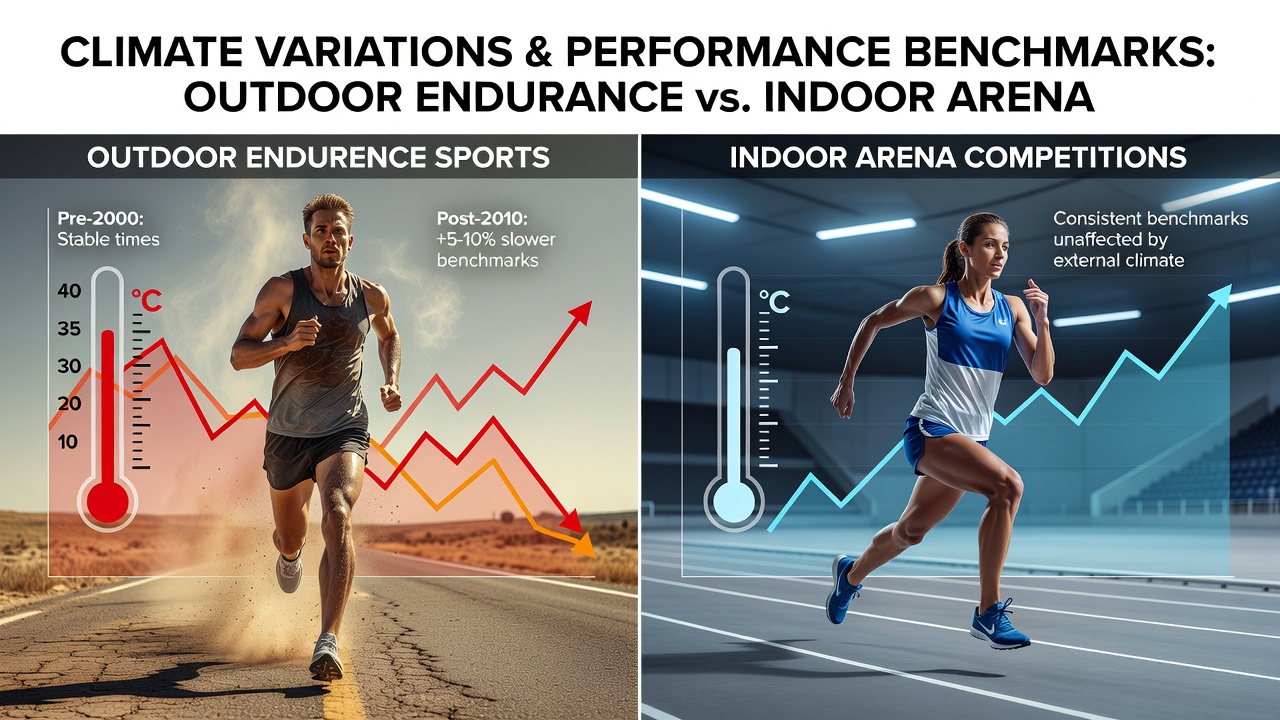
Climate variations across decades have produced measurable shifts in performance records for outdoor endurance sports while indoor arena competitions have remained largely insulated from those same environmental pressures because controlled facilities maintain stable temperatures and humidity levels year after year. Researchers tracking data from events like the Boston Marathon and the Tour de France have documented slower average finishing times during years with elevated temperatures and increased humidity whereas basketball leagues and volleyball tournaments held inside climate-regulated venues show no comparable seasonal fluctuations in scoring averages or win percentages.
Outdoor Endurance Records and Temperature Patterns
Historical analyses of marathon results indicate that when ambient temperatures exceed 20 degrees Celsius runners experience measurable reductions in pace with elite athletes losing several minutes over the full distance compared to cooler conditions according to records maintained by race organizers. Studies of cycling grand tours reveal similar patterns where stages contested in heatwaves produce lower average speeds and higher rates of withdrawals while stages run in moderate temperatures allow riders to maintain higher power outputs over extended distances. Data compiled from multiple decades shows that wet bulb globe temperature readings above 25 degrees Celsius correlate with increased finishing times in triathlon events as well because the combination of heat and humidity impairs thermoregulation during prolonged efforts.
Observers note that these effects compound across years when climate trends produce more frequent extreme heat days in regions that traditionally hosted major races and the cumulative impact appears in aggregate performance statistics rather than isolated outliers. For instance long-term comparisons of Olympic marathon results across different host cities demonstrate that events staged in warmer climates consistently post slower winning times than those held in cooler venues even after accounting for course difficulty and altitude variations.
Indoor Arena Stability Across Seasons
Indoor competitions operate within enclosed environments where heating ventilation and air conditioning systems neutralize external climate influences so performance benchmarks in leagues such as the NBA and professional volleyball circuits display consistent scoring distributions regardless of outside weather conditions. League statistics collected over multiple seasons reveal that field goal percentages and assist totals remain statistically stable between summer and winter months whereas outdoor sports exhibit clear seasonal dips during periods of elevated heat. This controlled setting allows athletes to train and compete at predictable intensities without the physiological stress associated with heat stress or cold exposure that outdoor endurance participants must manage.
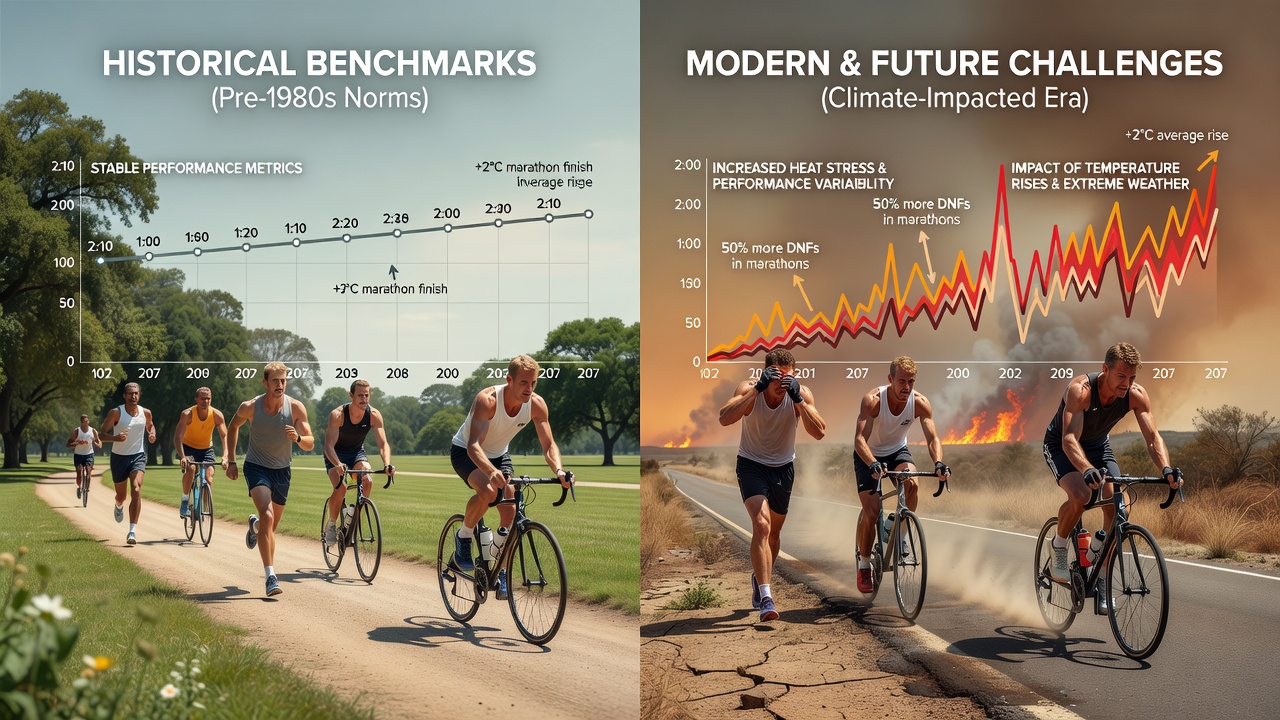
Facility records indicate that arena operators began implementing advanced climate control systems widely in the 1980s and performance data from that period onward shows reduced variance in game metrics compared to earlier decades when some indoor venues still experienced temperature swings. Those who've examined box scores across eras find that the introduction of reliable air conditioning coincided with steadier league-wide averages in points per game and player efficiency ratings.
Comparative Data Across Decades
Longitudinal studies comparing outdoor and indoor events highlight how climate fluctuations create divergence in benchmark trends with outdoor endurance sports showing greater sensitivity to rising global temperatures documented in reports from organizations such as NOAA climate archives. Indoor metrics on the other hand maintain tighter distributions because environmental variables remain constant and this stability extends to training protocols that can be replicated regardless of external conditions. European research institutions tracking multi-sport datasets have identified that endurance events held at high temperatures produce not only slower times but also shifts in pacing strategies as athletes conserve energy earlier in races.
Records from the 1990s through the 2020s illustrate that periods of anomalous heat align with temporary plateaus or declines in outdoor record progression while indoor sports continue incremental improvements driven by equipment and training advances rather than weather. As of August 2026 updated climate models project continued increases in extreme heat frequency which may further widen the gap between outdoor and indoor performance stability according to projections issued by Australian meteorological services.
Physiological Factors and Record Keeping
Physiological research demonstrates that elevated core temperatures reduce muscle efficiency and increase perceived exertion during endurance efforts which directly affects split times and overall results in outdoor competitions. Indoor athletes avoid these variables so their performance curves reflect skill development and tactical adjustments rather than environmental adaptation. Statistical reviews of historical data sets confirm that the standard deviation of finishing times widens during hot years for marathons and triathlons yet remains narrow for arena-based sports across the same calendar periods.
Those analyzing record books observe that outdoor governing bodies have begun adjusting start times and implementing additional cooling stations in response to documented performance impacts whereas indoor venues require no such modifications because climate control already mitigates external variations.
Conclusion
Climate variations have produced distinct effects on historical performance benchmarks separating outdoor endurance sports from indoor arena competitions through measurable differences in environmental exposure and physiological response. Data across multiple decades and geographic regions shows consistent patterns where heat and humidity slow outdoor results while indoor metrics stay stable under controlled conditions. Continued monitoring of temperature trends will allow analysts to track whether these divergences intensify in coming years.