How Modifications to Playing Surfaces Have Altered Movement Patterns and Injury Incidences in Professional Athletic Environments Based on Biomechanical Research
David Jenkins · Aug 22, 2026
How Modifications to Playing Surfaces Have Altered Movement Patterns and Injury Incidences in Professional Athletic Environments Based on Biomechanical Research
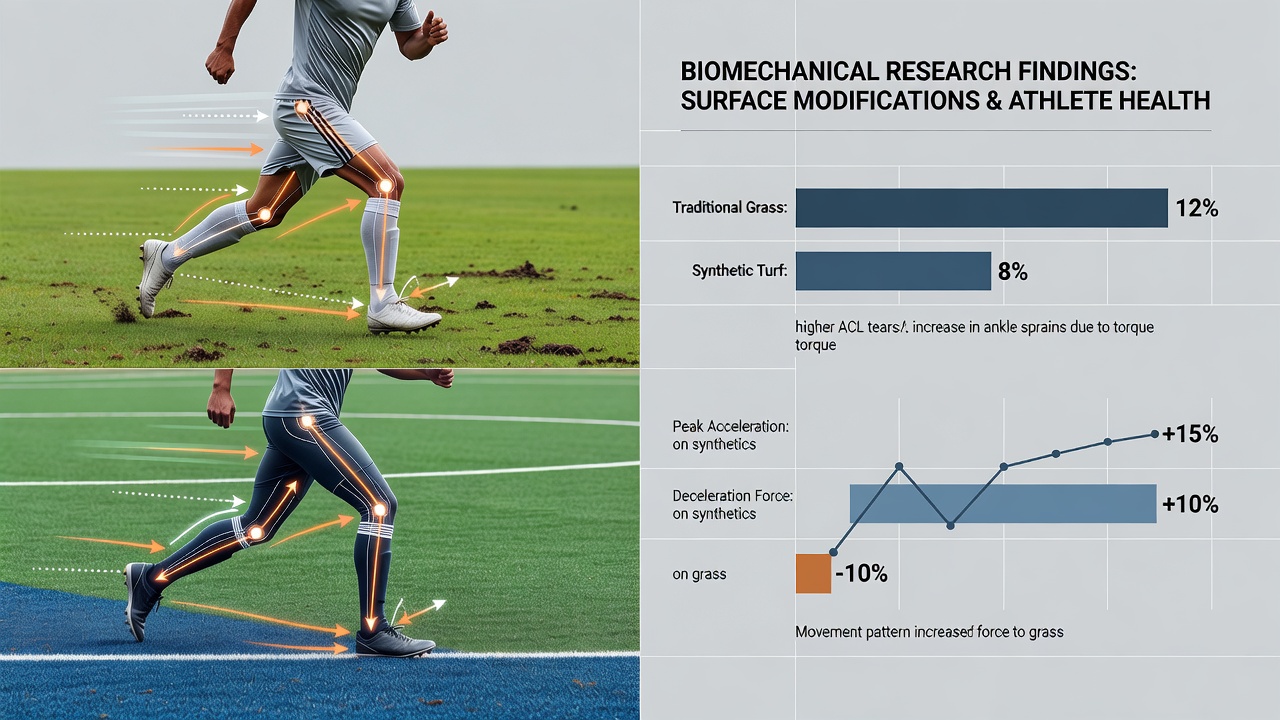
Professional sports have seen widespread adoption of engineered playing surfaces over the past two decades, and researchers tracking these shifts report measurable changes in how athletes move and how often injuries occur. Data from multiple leagues show that hybrid grass systems and advanced artificial turfs alter ground reaction forces, which in turn modifies stride length, joint loading, and cutting mechanics during high-speed maneuvers.
Early Surface Innovations and Their Measured Effects
Stadium operators began installing third-generation artificial turfs in the late 1990s, and biomechanical laboratories soon documented differences in friction coefficients compared with natural grass. Studies using motion-capture systems revealed that athletes on these surfaces often shortened their braking steps before directional changes, a pattern linked to higher peak torques at the knee and ankle. By 2015 several European soccer clubs had switched to hybrid carpets reinforced with synthetic fibers, and subsequent force-plate analyses indicated reduced energy loss during acceleration yet increased shear forces during pivots.
Biomechanical Shifts in Elite Competition
Researchers at institutions across North America and Europe have quantified how surface stiffness influences lower-limb kinematics. When athletes plant and cut on firmer hybrid pitches, hip flexion angles decrease slightly while knee valgus moments rise, according to synchronized video and sensor data collected during match simulations. These adjustments appear consistently in both American football and soccer cohorts, where players must execute repeated lateral movements within confined spaces.
One longitudinal project followed professional rugby players across two seasons and found that those competing on newer generation carpets displayed altered foot-strike patterns, with earlier forefoot loading that redistributed impact away from the heel. The same cohort recorded fewer muscle strains but a modest uptick in ligament sprains during the second year of exposure.
Injury Rate Trends Across Leagues
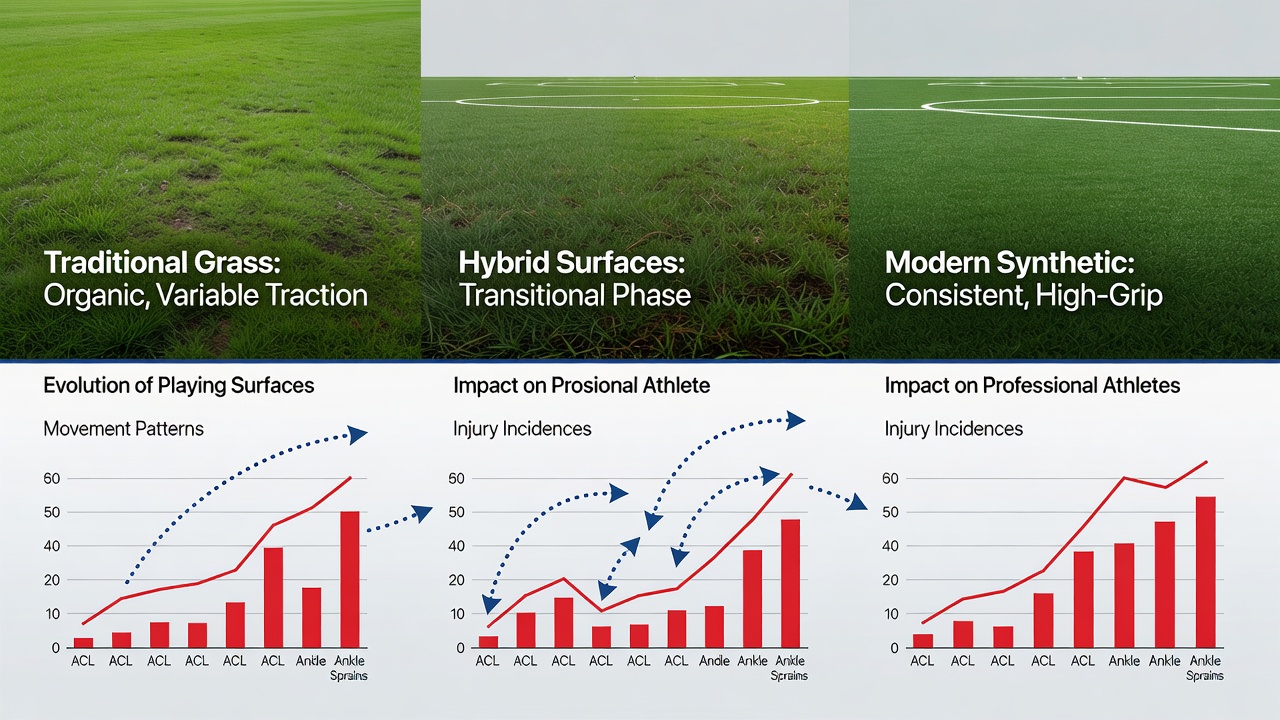
League-wide surveillance programs have tracked anterior cruciate ligament tears and ankle inversion injuries since the widespread rollout of modified surfaces. Figures released by the NCAA Injury Surveillance Program show that non-contact knee injuries on artificial turf remained elevated through 2024, while ankle injury rates declined after fields received regular infill maintenance and shock-pad upgrades. Similar patterns emerged in Australian rules football, where governing bodies reported a stabilization of soft-tissue injury numbers once clubs standardized surface testing protocols.
Canadian researchers collaborating with multiple NHL teams examined goaltender movements on resurfaced ice-adjacent training areas and noted that altered traction properties changed push-off angles during lateral slides. Although ice itself remained unchanged, the surrounding synthetic zones influenced recovery steps, and injury logs indicated fewer adductor strains once players adapted their technique.
Recent Data Collection and Ongoing Monitoring
In August 2026 several international federations began sharing standardized surface-testing results through a joint database, allowing direct comparison of force-reduction values across continents. Early analysis of that dataset suggests that fields meeting updated FIFA quality standards correlate with lower overall injury incidence in men's and women's professional soccer, yet the reduction varies by player position and match intensity. Midfielders, who cover greater distances, appear to benefit more from compliant surfaces than central defenders who engage in more frequent collisions.
Biomechanics teams continue to deploy wearable inertial sensors during training to capture real-time loading profiles. These tools have helped identify individual athletes whose movement signatures deviate from team norms on particular surfaces, prompting targeted conditioning programs that emphasize eccentric hamstring strength and ankle stability.
Conclusion
Biomechanical research documents clear links between playing-surface modifications and shifts in athlete movement mechanics, while injury surveillance data reveal position-specific and sport-specific patterns that evolve as surfaces improve. Continued collection of standardized metrics across leagues will allow practitioners to refine maintenance schedules and athlete preparation strategies, keeping performance and safety considerations aligned.