Shifting National Dominance Patterns in Racket and Club Sports Leaderboards Since the 1980s
Sofia Lorenz · Jun 20, 2026
Shifting National Dominance Patterns in Racket and Club Sports Leaderboards Since the 1980s
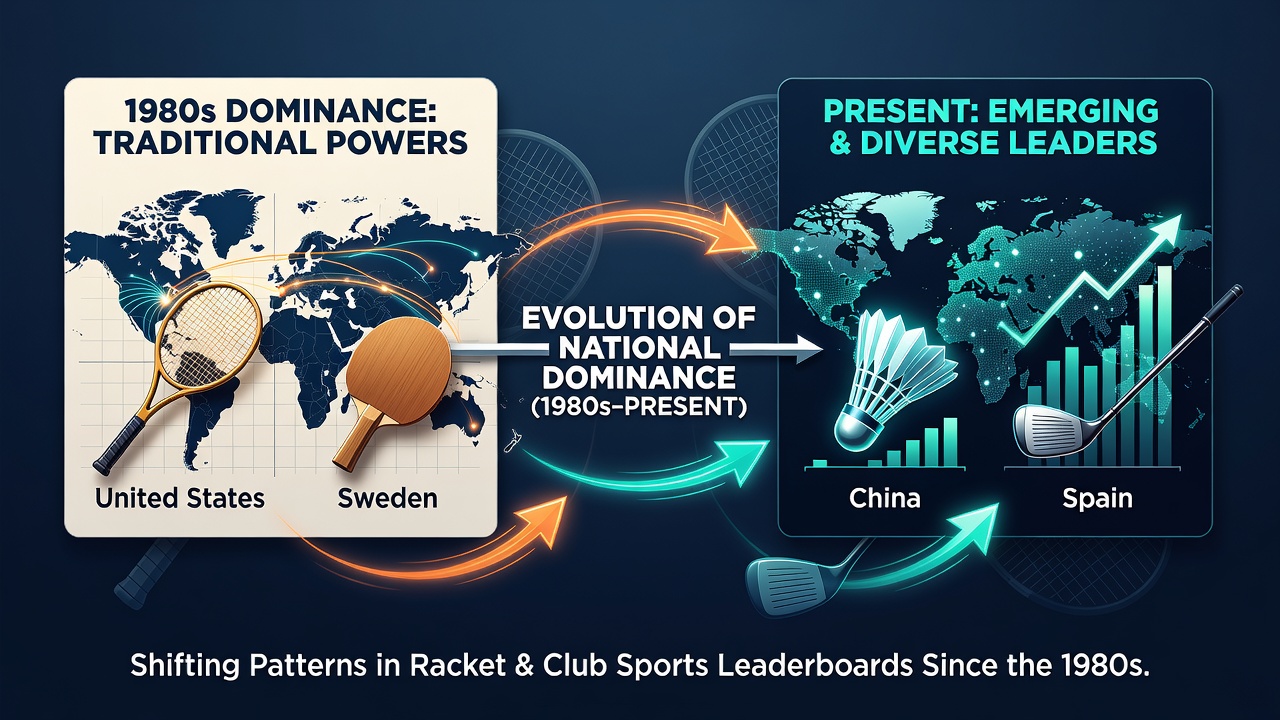
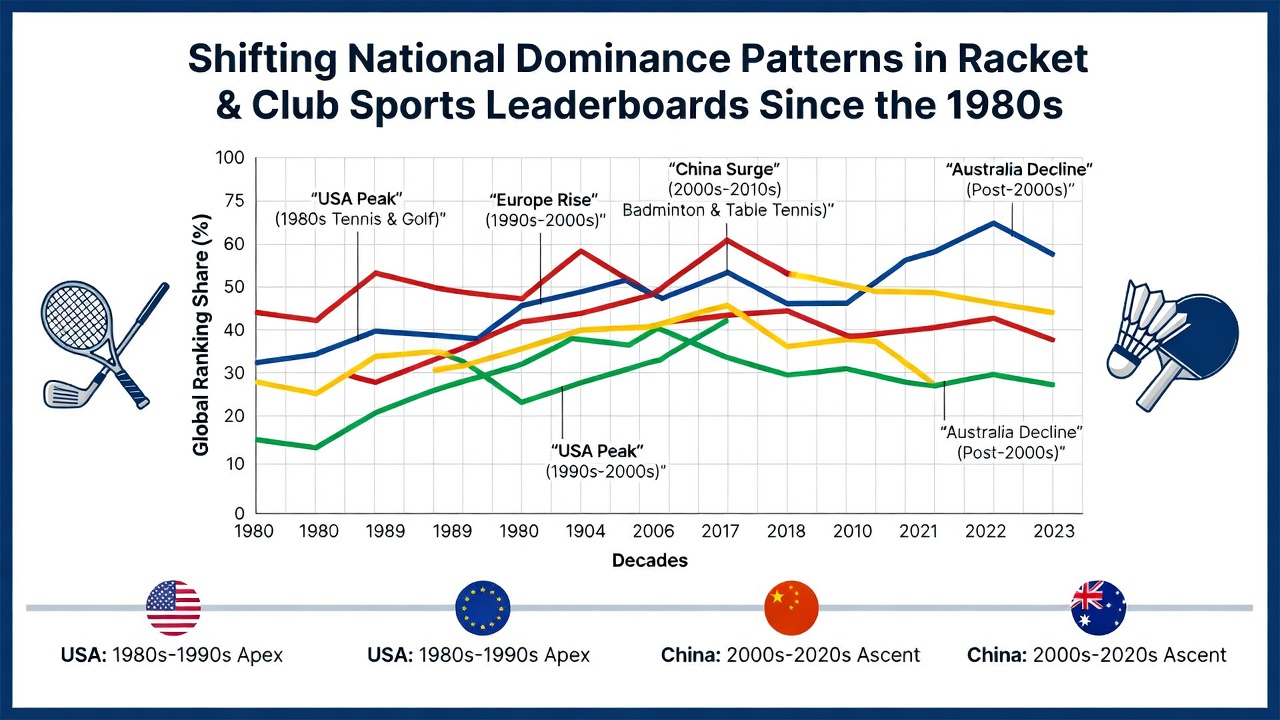
National representation on leaderboards in racket sports including tennis, badminton, table tennis, and squash along with club sports such as golf has undergone measurable changes since the 1980s, and data from ranking systems reveal patterns tied to investment in youth programs, coaching infrastructure, and participation rates across regions. In tennis the ATP and WTA singles rankings tracked a concentration of American and Australian players in the top 10 during the 1980s followed by increased European presence in subsequent decades while badminton world rankings maintained strong East Asian representation with periodic European and Southeast Asian entries. Golf major championship leaderboards and official world golf rankings similarly illustrate transitions from United States dominance to broader international distribution beginning in the 1990s.
Tennis Leaderboard Trends Across Decades
ATP year-end top 10 lists from 1980 through 1989 featured American players in at least six positions each year according to official tour archives with Australian athletes frequently occupying additional spots. European nations including Sweden and Germany began appearing more regularly in the 1990s as national federations expanded training centers and the International Tennis Federation reported growth in licensed players outside North America. By the 2000s Spanish and Swiss athletes occupied multiple top 10 positions simultaneously while Russian players entered the elite tier after domestic programs received increased state support. Data compiled through June 2026 show continued diversification with players from Italy, Canada, and Serbia maintaining consistent top 20 presence while the number of nations represented in the top 50 has risen from an average of eight in the 1980s to fourteen in recent seasons.
Badminton and Table Tennis Shifts
Badminton world rankings maintained by the Badminton World Federation demonstrate sustained leadership from China and Indonesia since the 1980s with Chinese athletes occupying four to six of the top 10 singles positions in most years through the present. European nations such as Denmark and England secured occasional top five placements after targeted development initiatives in the 1990s and 2000s while Malaysia and Thailand increased representation in doubles categories. Table tennis rankings tracked by the International Table Tennis Federation show Chinese players holding the majority of top 20 positions from 1980 onward with occasional entries from South Korea and Japan. European and North American athletes have remained below five percent of the top 50 since the 1990s despite expanded global tournaments.
Golf and Broader Club Sport Patterns
Official World Golf Ranking data and major championship results indicate United States players held over 60 percent of top 10 positions through the late 1980s before European athletes from England, Spain, and Germany rose to prominence in the 1990s and early 2000s. South African and Australian golfers secured multiple major titles and ranking points during the same period while Asian nations including Japan and South Korea entered the top 50 more frequently after 2005. As of June 2026 the top 20 includes athletes from nine different countries compared with an average of five nations represented in equivalent lists from the 1980s. Squash rankings maintained by the Professional Squash Association reflect alternating periods of Egyptian, British, and Pakistani leadership with Egyptian athletes occupying the majority of top 10 positions in the 2010s and continuing into 2026.
Factors Documented in Participation and Funding Data
National sports agencies and academic studies link shifts in leaderboard composition to measurable increases in registered players and coaching certifications. The International Olympic Committee reports growth in national badminton and table tennis federations across Asia and Europe after 1990 while golf participation statistics compiled by the PGA Tour and European Tour show expanded junior programs in Australia and South Korea correlating with higher ranking placements after 2000. Research published by university sports science departments indicates that countries investing in centralized training facilities recorded higher percentages of athletes reaching top 50 positions within ten years of program initiation. These patterns appear consistently across racket and club sports without requiring cross-sport technique comparisons.
Current Distribution as of Mid-2026
Rankings updated through June 2026 continue the established trajectory of broader geographic representation in tennis and golf while badminton and table tennis retain concentrated national profiles. The number of countries with at least one player in the ATP top 100 stands at 28 compared with 19 in 1990 and similar expansion appears in women's rankings. Golf world rankings list athletes from 12 nations in the top 30 a figure that has doubled since the 1980s. Observers tracking these metrics note that funding allocation and talent identification systems remain the primary documented variables associated with sustained national presence on leaderboards.
Conclusion
Leaderboard data across racket and club sports since the 1980s document clear transitions in national dominance driven by documented changes in participation numbers, training infrastructure, and federation support. Tennis and golf show the widest geographic spread in recent years while badminton and table tennis maintain established regional concentrations. These patterns emerge consistently from official ranking archives and participation statistics without reliance on subjective interpretation. Continued monitoring through established governing bodies provides the factual basis for tracking future shifts.