Shifts in Scouting Methodologies That Shaped Selections of Standout Quarterbacks and Midfielders Across Professional Leagues
Sofia Lorenz · Jul 25, 2026
Shifts in Scouting Methodologies That Shaped Selections of Standout Quarterbacks and Midfielders Across Professional Leagues
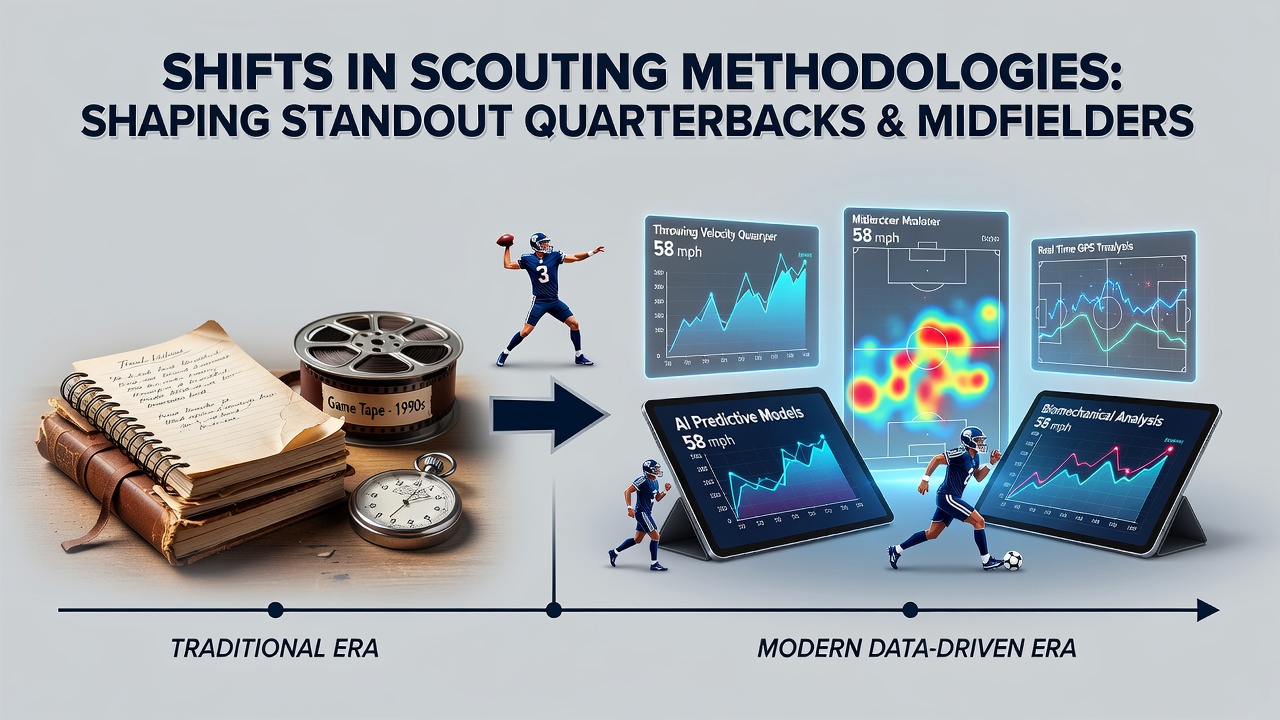
Professional leagues have tracked changes in how teams identify talent at the quarterback and midfielder positions over recent decades, with data from the NFL and European soccer competitions showing a clear move away from purely observational assessments toward integrated systems that combine video review, biomechanical measurements, and statistical modeling. These adjustments gained momentum as organizations gained access to larger datasets from wearable devices and match-tracking software, allowing scouts to quantify traits that once relied on subjective judgment during live games and combine events.
Early Reliance on Traditional Evaluation Tools
Scouting operations in the mid-20th century centered on in-person observation at college games and high school showcases, where evaluators recorded notes on arm strength, mobility, and field vision for quarterbacks while noting stamina, passing range, and tactical awareness for midfielders. Leagues documented these practices through archived reports that emphasized physical measurements and basic film breakdowns, with teams often prioritizing players who demonstrated standout performances in high-pressure settings without extensive cross-referencing against league-wide benchmarks. This approach produced selections based on visible athletic markers, yet it left gaps in identifying consistent performers across varied game situations and opponent quality levels.
Integration of Quantitative Data Streams
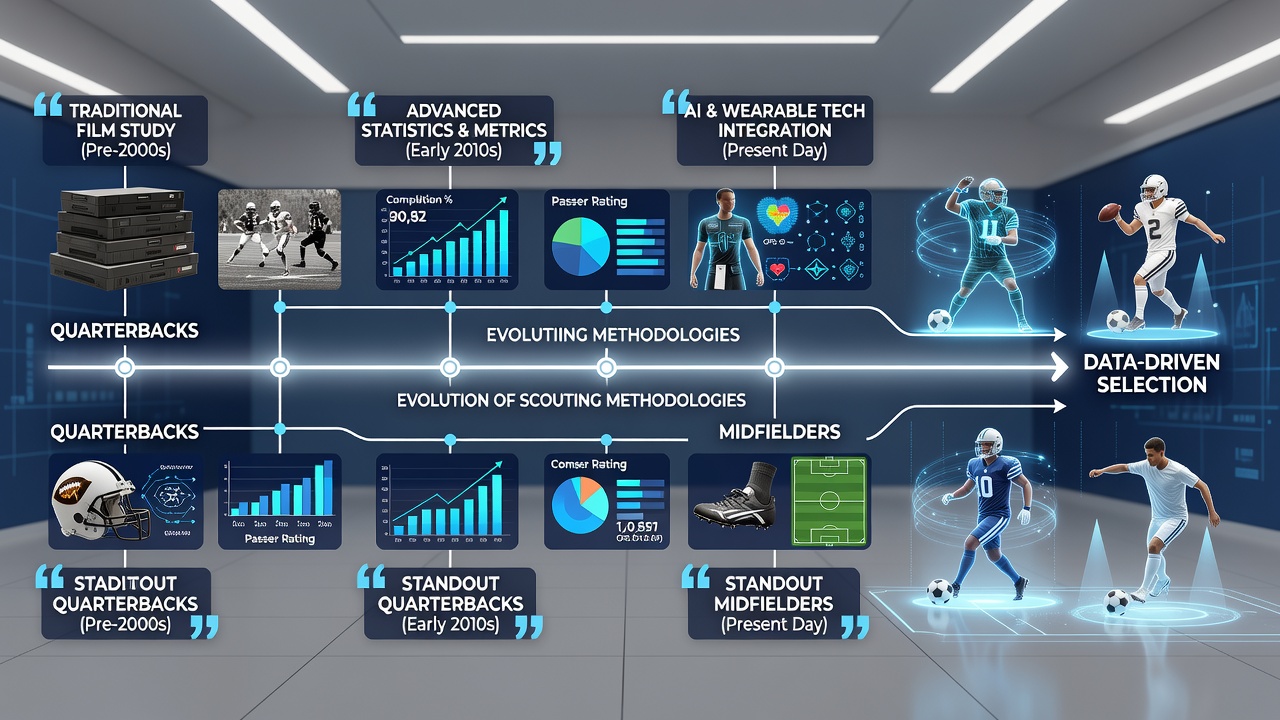
Beginning in the early 2000s, organizations started incorporating statistical platforms that aggregated play-by-play information and advanced metrics such as completion percentage above expectation for quarterbacks and progressive passes per 90 minutes for midfielders. Research compiled by league partners indicated that these additions helped reduce variance in draft and transfer decisions, with teams cross-checking traditional film grades against expected points added models and spatial tracking outputs. By the 2010s, GPS and accelerometer data from training sessions allowed analysts to measure workload tolerance and movement efficiency patterns that correlated with long-term availability in both the NFL and top European divisions.
Application to Quarterback Selections
NFL teams adjusted their quarterback evaluation protocols to include decision-speed metrics derived from simulated pressure scenarios and route-timing accuracy captured through optical tracking systems. Data released through combine reports and team archives shows that selections after 2015 increasingly favored prospects whose release mechanics and pre-snap recognition scores aligned with historical starters who maintained above-average adjusted net yards per attempt across multiple seasons. Observers note that this emphasis produced measurable shifts in how organizations ranked players during the annual draft process, particularly when comparing arm talent alone against combined cognitive and physical profiles.
Analysts at professional franchises now review synchronized datasets that overlay quarterback dropback timing with receiver separation values, creating layered evaluations that account for both individual skill execution and scheme fit. Figures from recent draft classes reveal higher retention rates for quarterbacks whose pre-draft testing included extensive situational film study compared with earlier cohorts evaluated primarily through pro day workouts.
Adaptations in Midfielder Recruitment
European clubs tracking midfielder targets across the Premier League, La Liga, and Bundesliga incorporated network analysis tools that map passing connections and pressing triggers within team structures. Studies conducted by performance research groups linked these methods to improved identification of players who sustain high involvement rates while maintaining low turnover percentages under varying tactical systems. Scouting departments began weighting off-ball movement data and recovery speed metrics more heavily, producing transfer activity that favored midfielders whose profiles matched historical benchmarks for consistent starter production across full campaign schedules.
By mid-2026, transfer windows reflected further refinement as clubs integrated machine-learning outputs that forecast positional versatility based on historical match logs. Reports from continental federations documented an uptick in midfield signings supported by multi-season trend analysis rather than single-tournament highlights, aligning recruitment strategies with longer-term squad-building objectives.
Cross-League Patterns and Ongoing Refinements
Both the NFL and major soccer leagues have converged on hybrid scouting frameworks that blend human expertise with algorithmic screening of large datasets. Organizations report allocating greater resources to staff training on data interpretation, resulting in standardized processes for validating new metrics against on-field outcomes. Evidence from league-wide performance summaries indicates that these frameworks contributed to steadier hit rates on high draft picks and premium transfers at the two positions, although individual team success continues to vary based on implementation quality and roster context.
Conclusion
Scouting methodologies for quarterbacks and midfielders have evolved through successive layers of measurement tools that now coexist with established observational techniques. Professional leagues continue to refine these systems as new tracking technologies emerge, with current practices in July 2026 emphasizing predictive modeling that incorporates both technical execution and contextual performance indicators across extended timeframes.