Sibling Influence on Skill Development: How Family Structures Shape Technique Acquisition in Diverse Athletic Pursuits Worldwide
David Jenkins · Aug 17, 2026
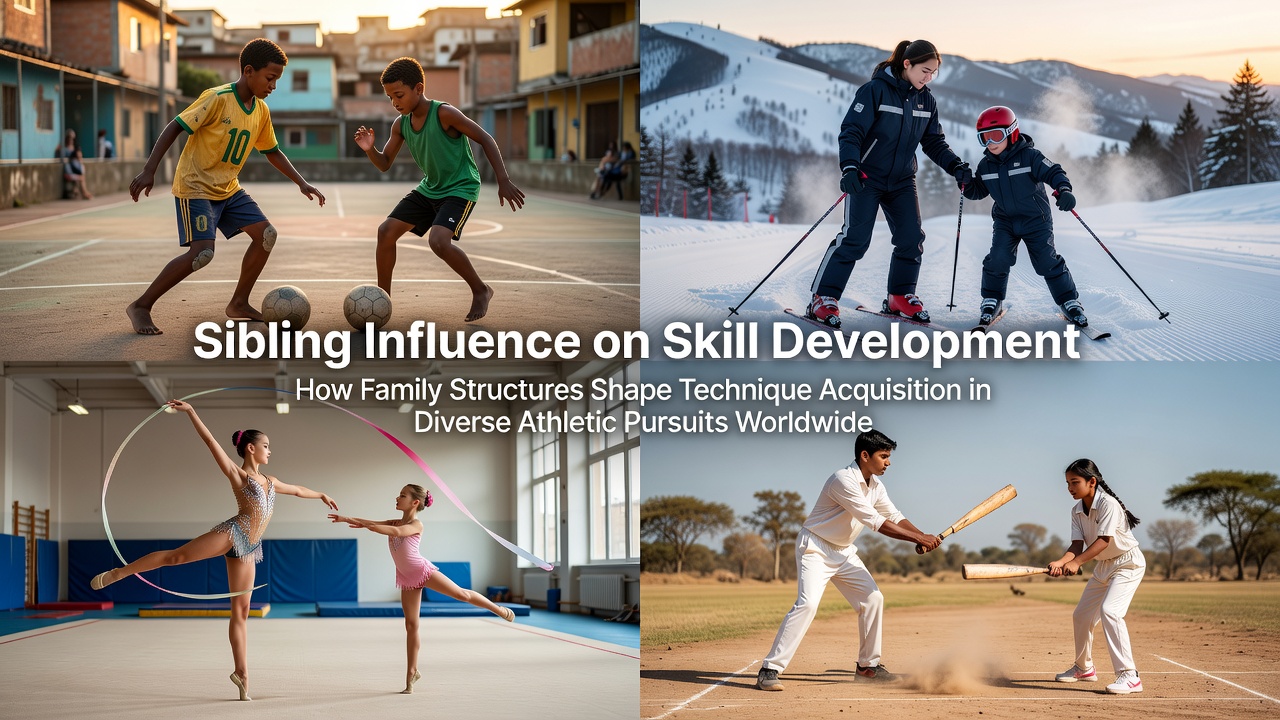
Sibling Influence on Skill Development: How Family Structures Shape Technique Acquisition in Diverse Athletic Pursuits Worldwide
Family structures around the globe influence how children acquire athletic techniques, with siblings often serving as primary models, competitors, and motivators in skill development. Research from multiple countries shows that children with brothers or sisters tend to encounter repeated practice opportunities at home that complement formal coaching, while single-child households rely more heavily on external programs for technique refinement.
Birth Order and Technique Transmission
Older siblings frequently introduce fundamental movements to younger family members through informal play, and studies conducted by researchers at the University of Queensland indicate that first-born athletes in individual sports such as swimming and gymnastics demonstrate earlier mastery of basic drills when they later teach those same movements. Second-born children, by contrast, often accelerate their learning curves because they observe and replicate actions modeled by older siblings, a pattern documented across youth soccer programs in Brazil and cricket academies in India. Data collected in 2025 from longitudinal family surveys in Canada reveal that birth-order effects appear most pronounced in households where parents encourage shared training sessions rather than structured lessons alone.
Competition Dynamics Within Families
Sibling rivalry generates consistent performance pressure that drives technique adjustments, and evidence from the Australian Institute of Sport demonstrates measurable improvements in footwork precision among young tennis players who regularly compete against brothers or sisters at home. This internal competition operates differently across cultures: in collectivist societies such as those in East Asia, cooperation between siblings during joint practice sessions often yields faster acquisition of complex motor patterns than rivalry alone, whereas Western European data highlight accelerated decision-making speeds in team sports when siblings challenge each other directly. Observers note that these patterns hold steady regardless of parental involvement levels, provided the siblings remain close in age and skill.
Cultural Variations in Family Influence
Family size and composition shape access to technique resources in distinct ways across regions. In many Latin American households, larger sibling groups create rotating practice partners that simulate game conditions for sports like volleyball and basketball, while smaller nuclear families in North America more commonly supplement home training with club memberships. A 2024 report issued by Sport Canada found that athletes raised with at least one sibling reached advanced technical milestones in endurance events six to eight months earlier on average than peers without siblings, a gap attributed to daily informal drills rather than differences in coaching quality. Similar trends surface in Scandinavian youth hockey programs, where shared ice time among brothers correlates with refined skating mechanics by adolescence.

Recent Data and Global Patterns
Figures released in August 2026 by the International Olympic Committee’s youth development division show that multi-sibling households account for 62 percent of athletes who reach national junior teams in both individual and team sports across sampled countries. These statistics align with earlier findings from the Japanese Institute of Sports Science, which tracked technique transfer rates in martial arts families and recorded higher consistency in stance and balance execution when siblings trained together regularly. Researchers emphasize that economic factors intersect with family structure, as households able to support multiple children in one sport often maintain equipment and space that facilitate repeated skill rehearsal.
Cross-sport examples illustrate the reach of sibling influence. In Brazilian futsal communities, older siblings pass dribbling sequences to younger ones during street games, and those sequences later transfer to formal soccer training. Parallel observations appear in Canadian hockey families, where backyard stickhandling sessions between siblings correlate with improved puck control metrics once players enter organized leagues. Data from these regions indicate that such home-based practice reduces the time required to achieve technical benchmarks set by national federations.
Conclusion
Global evidence consistently links sibling presence and family training patterns to variations in athletic technique acquisition, with measurable effects appearing across continents and sport types. Continued collection of family-level performance data will clarify how these dynamics evolve alongside changing household structures worldwide.