Stadium Design Evolutions and Their Effects on Home Field Performance Data in Baseball and Soccer
David Jenkins · Jul 1, 2026
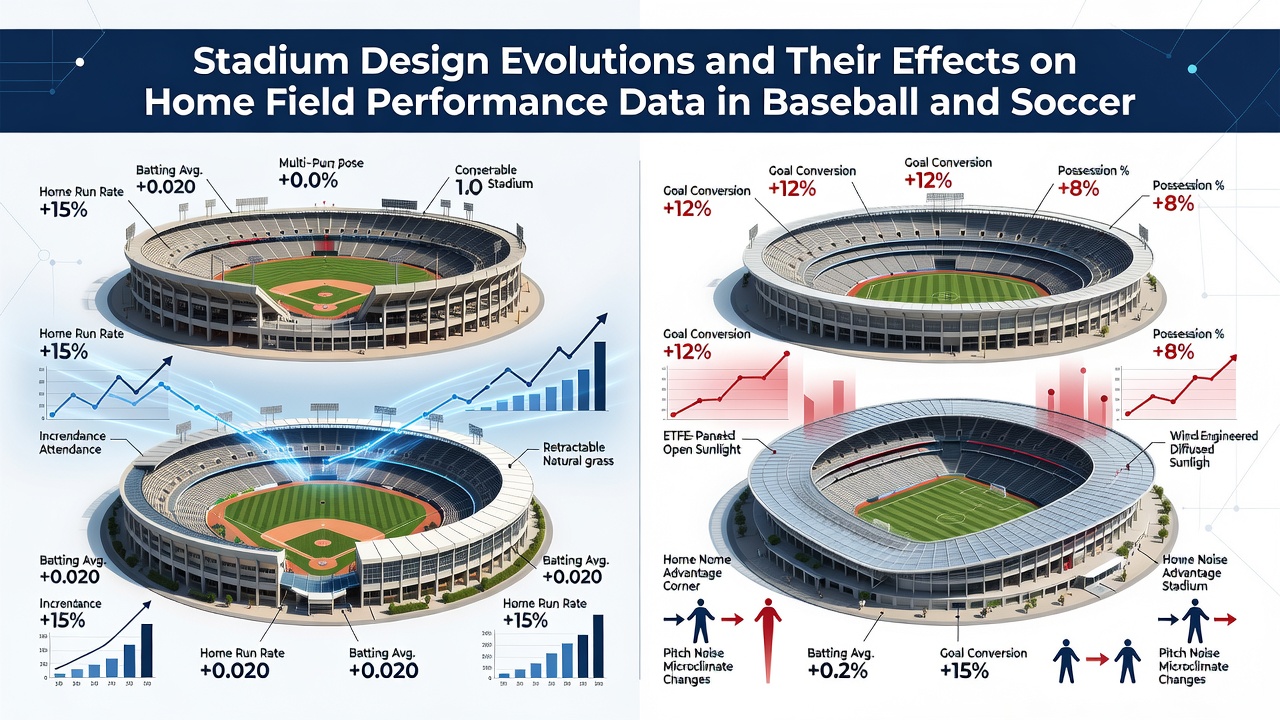
Stadium Design Evolutions and Their Effects on Home Field Performance Data in Baseball and Soccer
Stadium architecture in baseball and soccer has shifted dramatically over the past century, moving from simple wooden grandstands to complex structures incorporating climate control, variable playing surfaces, and seating arrangements that alter acoustics and sightlines. These changes coincide with measurable shifts in home field performance statistics, where teams compile distinct records at their own venues compared to road games.
Early 20th Century Foundations adn Open-Air Designs
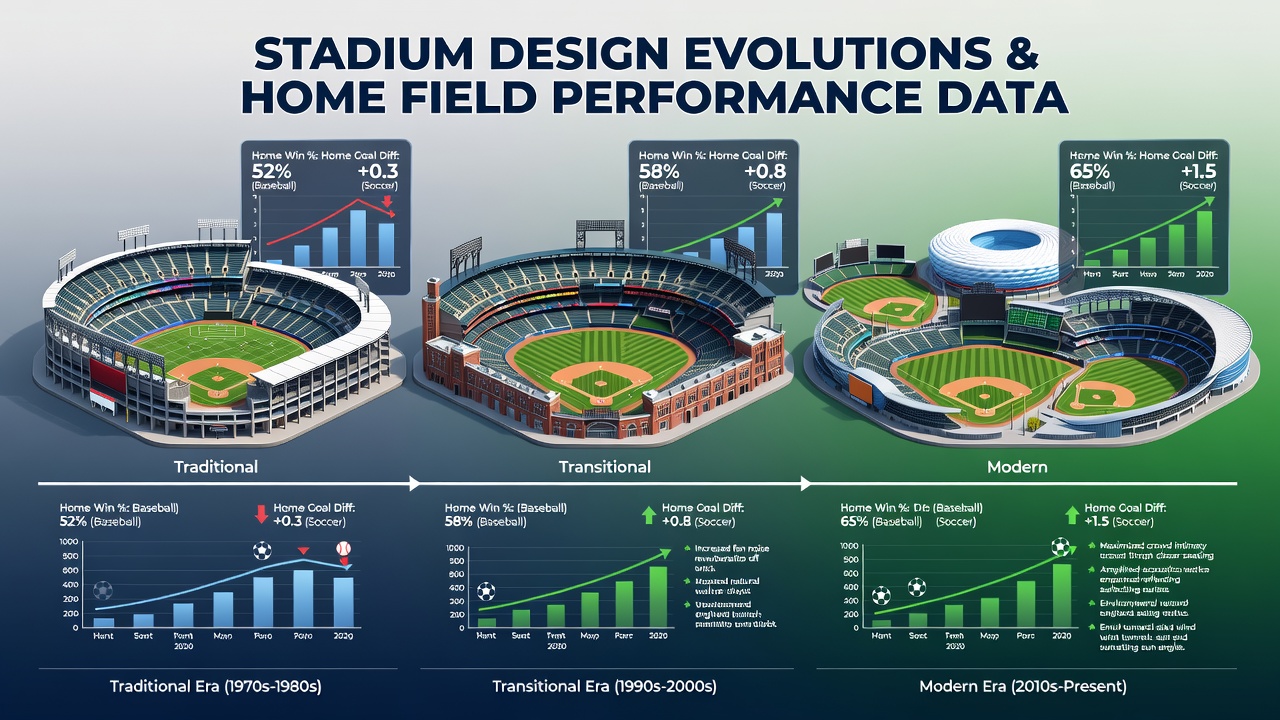
Baseball parks built before 1950 often featured irregular outfield dimensions shaped by surrounding urban blocks, which created unique wind patterns and ball flight behaviors that favored certain hitters at home. Soccer grounds from the same era relied on natural grass pitches with minimal drainage systems, leading to variable conditions that influenced passing accuracy and injury rates during extended home stands. Data compiled from league records shows home teams in both sports maintained win percentages around 55 percent during this period, with baseball pitchers posting lower earned run averages in familiar ballparks.
Postwar Expansion and Enclosed Structures
After 1950 many venues added upper decks and partial enclosures that reduced crosswinds while amplifying crowd noise. In baseball this translated to measurable drops in home run totals at certain multipurpose stadiums compared to earlier open designs, while soccer clubs recorded higher goal tallies on artificial surfaces introduced in the 1970s. Researchers tracking performance metrics noted that home teams benefited from reduced travel fatigue and familiarity with surface speed, factors reflected in possession percentages and defensive error rates.
Modern Innovations Since 2000
Retractable roofs and climate-controlled environments became standard in new baseball facilities across North America, allowing teams to maintain consistent field conditions regardless of external weather. Soccer stadiums in Europe and South America adopted hybrid grass systems and advanced irrigation that stabilize playing surfaces throughout long seasons. Performance databases indicate home batting averages in covered baseball parks rose slightly after roof installations, whereas soccer teams playing on hybrid pitches showed improved passing completion rates at their home grounds. Observers note that seating proximity to the field in these newer venues correlates with increased home team success in close contests.
Studies from academic institutions have examined how sightline angles and video board placements affect player decision-making during home matches. In July 2026 several Major League Baseball and Major League Soccer venues completed upgrades to LED lighting systems and enhanced ventilation, producing initial data sets that track strikeout rates and set-piece conversion percentages before and after the modifications.
Surface and Dimension Impacts on Statistical Trends
Baseball outfield wall heights and distances directly influence doubles and triples totals recorded by home clubs, with deeper center field gaps associated with lower extra-base hit rates in home games. Soccer pitch widths and goal area markings affect crossing success and shot volume, patterns visible in league-wide home versus away goal differentials. Turf specialists track how grass root depth and infill materials alter ball roll speed, metrics that appear in advanced scouting reports used by both sports.
Acoustic and Environmental Factors
Enclosed designs amplify supporter noise, which correlates with higher opponent penalty counts in soccer and elevated strikeout totals for visiting batters in baseball. Temperature regulation inside domed venues reduces heat-related fatigue for home players during summer months, a factor reflected in late-inning performance splits. Air quality monitoring at high-altitude soccer stadiums and open baseball fields reveals additional variables tied to endurance and recovery between consecutive home dates.
Data Collection Methods and Recent Findings
League statisticians and independent researchers compile home field advantage figures using play-by-play logs, player tracking systems, and surface sensor readings. One analysis from Australian sports research archives compared venue modifications across multiple continents and identified consistent patterns in home win margins following surface and enclosure upgrades. Another project coordinated through Canadian university laboratories examined wind tunnel simulations of stadium geometries and their alignment with on-field batting and passing outcomes.
Teams that relocated to new facilities often experience an initial adjustment period before home performance stabilizes, with some clubs showing temporary dips in offensive output until players adapt to altered sightlines and surface responses. Longitudinal records demonstrate that these adaptations typically occur within two seasons.
Conclusion
Stadium design elements such as roof systems, surface technology, and spatial configurations continue to shape the numerical record of home field performance across baseball and soccer. Ongoing data collection through 2026 and beyond will clarify how incremental architectural adjustments influence player statistics and team results at specific venues.