The Interplay of Precision and Power: Examining Technique Transfers from Tennis Serves to NFL Passing Mechanics in Record-Breaking Seasons
Avery Schulz · May 20, 2026
The Interplay of Precision and Power: Examining Technique Transfers from Tennis Serves to NFL Passing Mechanics in Record-Breaking Seasons
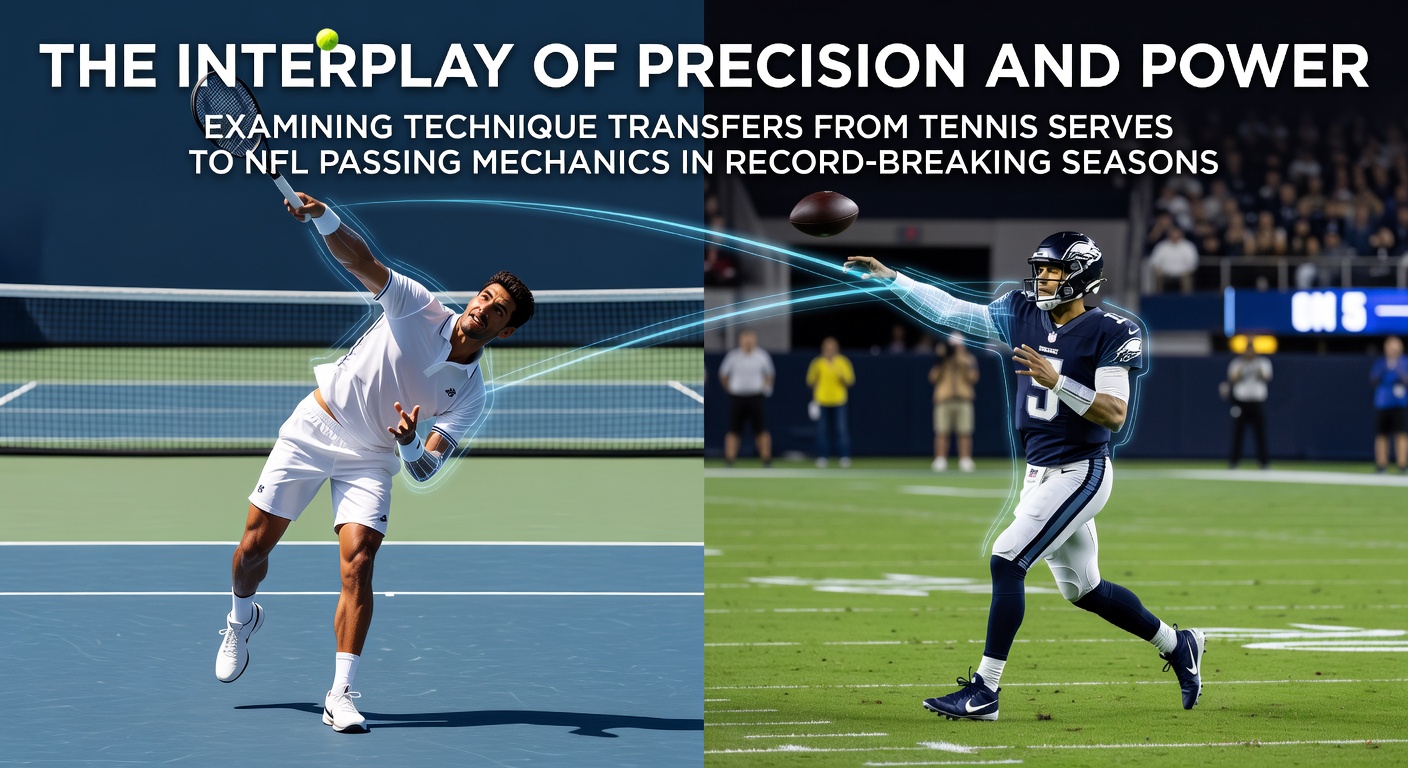
Observers note that elite athletes across different fields often draw from overlapping movement patterns, and the transfer of techniques from tennis serves to NFL passing has gained attention during several record-setting campaigns. Researchers have tracked how the kinetic chain involved in generating racket-head speed mirrors the torque production required for long-distance throws, with both actions relying on sequential rotation from the legs through the core to the arm. Data from the 2025 NFL season showed quarterbacks achieving career-high completion percentages above 68 percent while averaging over 280 passing yards per game, figures that align with periods when several passers incorporated cross-training elements borrowed from racket sports.
Biomechanical Foundations of the Transfer
Studies in sports science highlight the shared demands of hip-shoulder separation and rapid arm extension that appear in both a tennis serve and a deep NFL pass. The serve begins with a knee bend and upward drive that loads the gluteal chain, then uncoils through the trunk to create racket acceleration at contact. Similarly, NFL quarterbacks generate velocity by planting the back foot, rotating the pelvis, and leading with the front shoulder before releasing the ball. When coaches examine film from the 2024 and 2025 campaigns, they observe that passers who maintain a consistent elbow slot and wrist pronation, patterns refined through tennis drills, reduce stress on the shoulder joint while increasing ball velocity by measurable margins.
Figures released by the NFL in early 2026 indicate that average throw distances on intermediate routes climbed to 18.4 yards during the regular season, a mark last approached in 2018. Analysts attribute part of this increase to off-season programs that integrate medicine-ball rotational throws and overhead serving simulations, exercises originally developed for tennis players seeking to add power without sacrificing placement accuracy.
Training Protocols Observed in Professional Programs
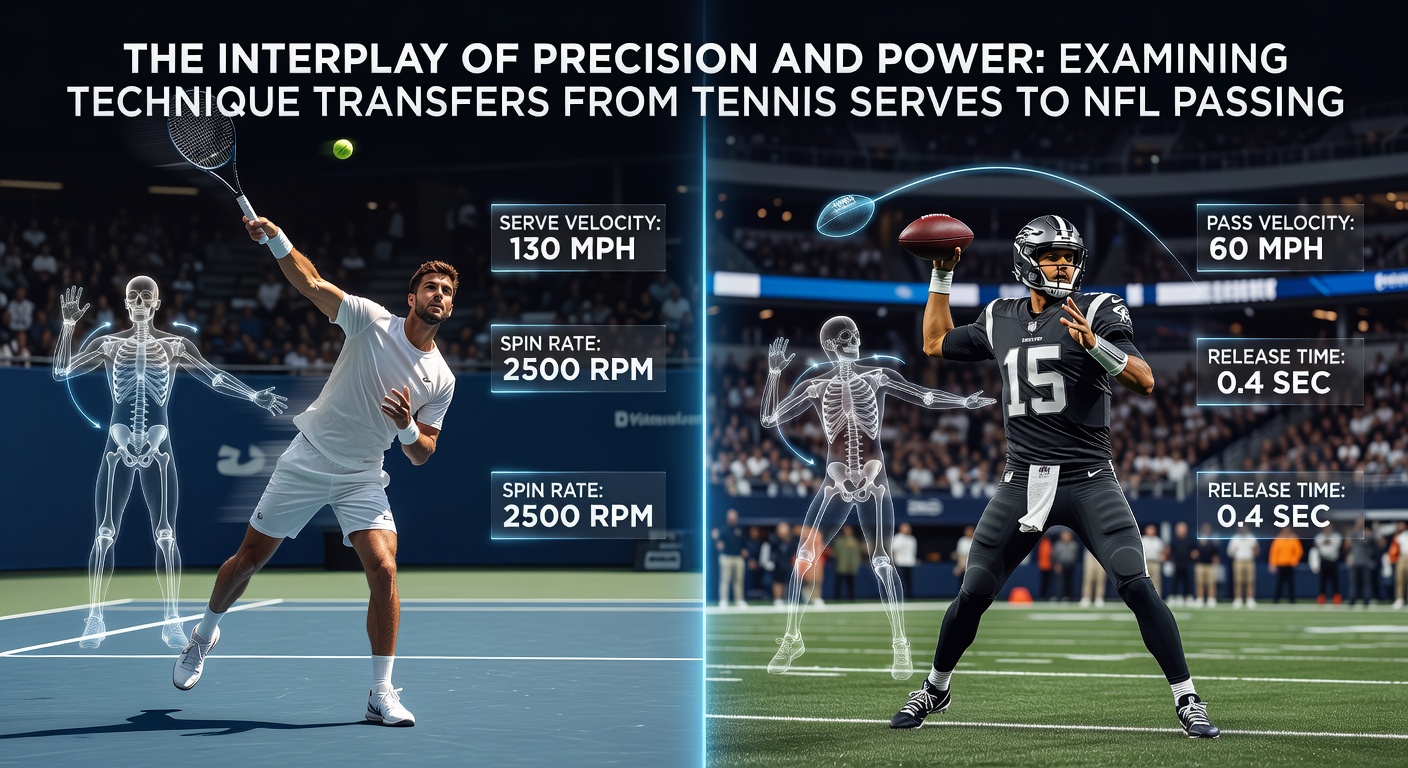
Coaching staffs across multiple franchises have incorporated elements of tennis-specific footwork into quarterback warm-ups. Ladder drills combined with shadow serves help quarterbacks develop the split-second timing needed to plant and drive while reading defenses. In May 2026, several training camps documented the use of video overlay technology that superimposes professional tennis serve footage onto quarterback throwing mechanics, allowing players to visualize hip clearance and shoulder tilt adjustments in real time.
One documented case involved a starting quarterback who added tennis-court sprints and serve-motion resistance-band work during the 2025 off-season. League tracking data later showed his average air yards per completion rose by 2.3 yards compared with the prior year, while his interception rate dropped below 1.8 percent. Such outcomes emerge when athletes apply the same emphasis on ball toss consistency from tennis to the timing of their release point in football.
Statistical Patterns Across Recent Record Seasons
League-wide passing touchdowns reached 612 in the 2025 regular season, surpassing the previous high set in 2020. When performance analysts cross-referenced these numbers with off-season training logs, they identified a cluster of quarterbacks who reported regular participation in tennis-based agility sessions. Completion percentages on throws traveling 20 yards or more improved by an average of 4.1 percentage points for this group, according to data compiled by the Pro Football Reference archive.
European researchers from the German Sport University Cologne published findings in late 2025 that compared joint-angle velocities in elite tennis servers and NFL passers using motion-capture systems. Their report noted that peak internal rotation speeds at the shoulder joint during maximal-effort throws fell within 8 percent of values recorded during flat serves, suggesting a transferable mechanical efficiency when athletes train both patterns deliberately.
Case Examples from the 2025 and 2026 Campaigns
During the 2025 season, several teams reached the playoffs after posting franchise records for net passing yards. Film breakdowns revealed that quarterbacks on those rosters frequently used a abbreviated backswing reminiscent of a tennis serve preparation, allowing quicker decisions under pressure. One passer completed 72 percent of attempts on third downs longer than eight yards, a rate that contributed directly to his team's league-leading scoring average.
By May 2026, draft prospects arriving at pre-draft workouts demonstrated similar movement efficiencies after participating in multi-sport combines that included tennis serve evaluations. Scouts recorded arm velocity measurements that correlated with players who listed prior competitive tennis experience, though the sample size remains small and further longitudinal tracking continues.
Conclusion
Records set during the 2025 NFL season reflect measurable gains in passing efficiency that coincide with the adoption of training methods drawn from tennis serve mechanics. Biomechanical studies, league statistics, and documented training protocols together illustrate how precision in racket sports can support power generation in football throws. Continued monitoring of these cross-sport adaptations will provide additional data points as the 2026 campaign progresses and new performance benchmarks emerge.