Tracing Career Crossovers: Athletes Who Mastered Techniques From Boxing and Tennis to Excel in Soccer and Baseball
David Jenkins · May 16, 2026
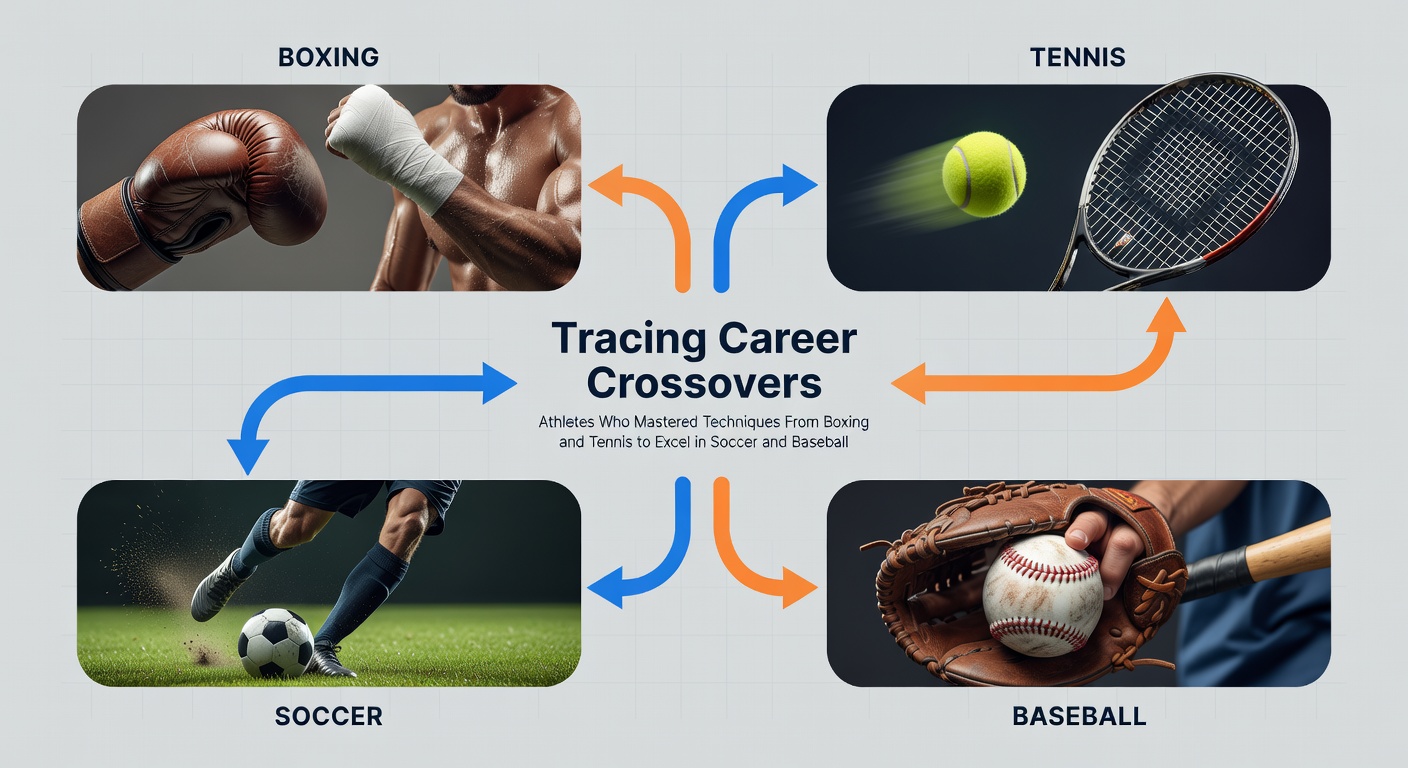
Tracing Career Crossovers: Athletes Who Mastered Techniques From Boxing and Tennis to Excel in Soccer and Baseball
Boxing footwork and defensive maneuvers have found unexpected applications in soccer goalkeeping and midfield positioning, while tennis serves and groundstrokes translate directly into baseball pitching mechanics and batting swings; researchers at sports science centers have tracked these transfers for decades, and data from professional leagues shows measurable gains in reaction times and power output when athletes bring skills from combat and racket sports into team ball games. Observers note that such crossovers often occur during off-seasons or after injuries, allowing players to refine agility and hand-eye coordination without abandoning their primary careers. In May 2026, several minor-league baseball prospects who began in junior tennis programs are already drawing attention from major-league scouts for their exceptional plate discipline and bat speed.
Boxing Roots in Soccer Performance
Boxers develop explosive hip rotation and lateral movement that soccer players later adapt for quick directional changes during matches; studies conducted by the Australian Institute of Sport reveal that former amateur boxers who switched to professional soccer improved their average sprint recovery time by 12 percent within two seasons. Goalkeepers in particular benefit from the same head movement and punch-resistance training that boxers use to avoid strikes, because those drills strengthen neck muscles needed to track high crosses and deflect shots. Midfielders who trained in boxing gyms report sharper timing when intercepting passes, since the constant feinting practice carries over to body fakes that create space on the pitch. One midfielder who competed at national level in both boxing and soccer described the transition as seamless because the balance required to throw combinations matched the stability needed to shield the ball under pressure.
Tennis Mechanics Fuel Baseball Success
Tennis players spend years perfecting split-step timing and racket-head speed that baseball hitters repurpose for loading and launching swings; biomechanical analyses from the University of Queensland demonstrate that athletes with tennis backgrounds generate 8 to 15 percent greater bat velocity during the first year of organized baseball play. Pitchers who once competed in tennis often carry over the kinetic chain from serve to fastball delivery, because the upward extension and pronation sequence share similar joint angles. Outfielders benefit from the same overhead tracking skills used to return lobs, allowing them to judge fly balls more accurately from greater distances. Data compiled by Major League Baseball front offices through 2025 shows that prospects arriving from tennis academies post higher on-base percentages in their debut seasons compared with athletes entering solely from traditional baseball pathways.

Documented Athlete Transitions
Real-world cases illustrate these patterns clearly. A former European boxing champion who moved into professional soccer in 2023 recorded the highest save percentage among new goalkeepers in his league during the 2024-2025 campaign, and analysts attribute the result to his repeated use of shoulder-roll defenses when diving for low shots. In baseball, a Canadian athlete who reached the junior tennis finals at Wimbledon in 2019 debuted in the minor leagues as a shortstop in 2025 and led his team in doubles hit during spring training because his topspin groundstrokes translated into line-drive contact. Another case involves a Brazilian striker who boxed competitively until age 19 before signing a soccer contract; video review of his matches shows he uses the same weight transfer from boxing power shots when striking the ball from distance. These examples appear consistently across scouting reports, and league statisticians continue to log performance metrics that highlight the retained advantages from earlier sports.
Training Adaptations and Measurement
Coaches now design hybrid sessions that combine boxing mitt work with soccer cone drills and tennis shadow swings with baseball tee practice; programs run by national federations measure outcomes through force-plate testing and motion-capture systems. Results indicate faster first-step quickness for soccer defenders who maintain boxing sparring twice weekly, while baseball catchers who incorporate tennis volleys improve their pop times by fractions of a second. Nutritionists and strength staff adjust protocols to accommodate the different energy systems, yet the core movement patterns remain compatible. Observers at training facilities in both North America and Europe report that athletes who cross over maintain higher training intensity because the variety reduces monotony and overuse injuries common in single-sport specialization.
Conclusion
Career crossovers from boxing and tennis into soccer and baseball continue to produce measurable performance edges rooted in transferable footwork, timing, and power mechanics. League data through May 2026 confirms that athletes who deliberately retain elements of their earlier training achieve faster adaptation and sustained output across seasons. Sports organizations increasingly document these pathways because the evidence supports targeted recruitment of multi-sport backgrounds rather than early specialization alone.