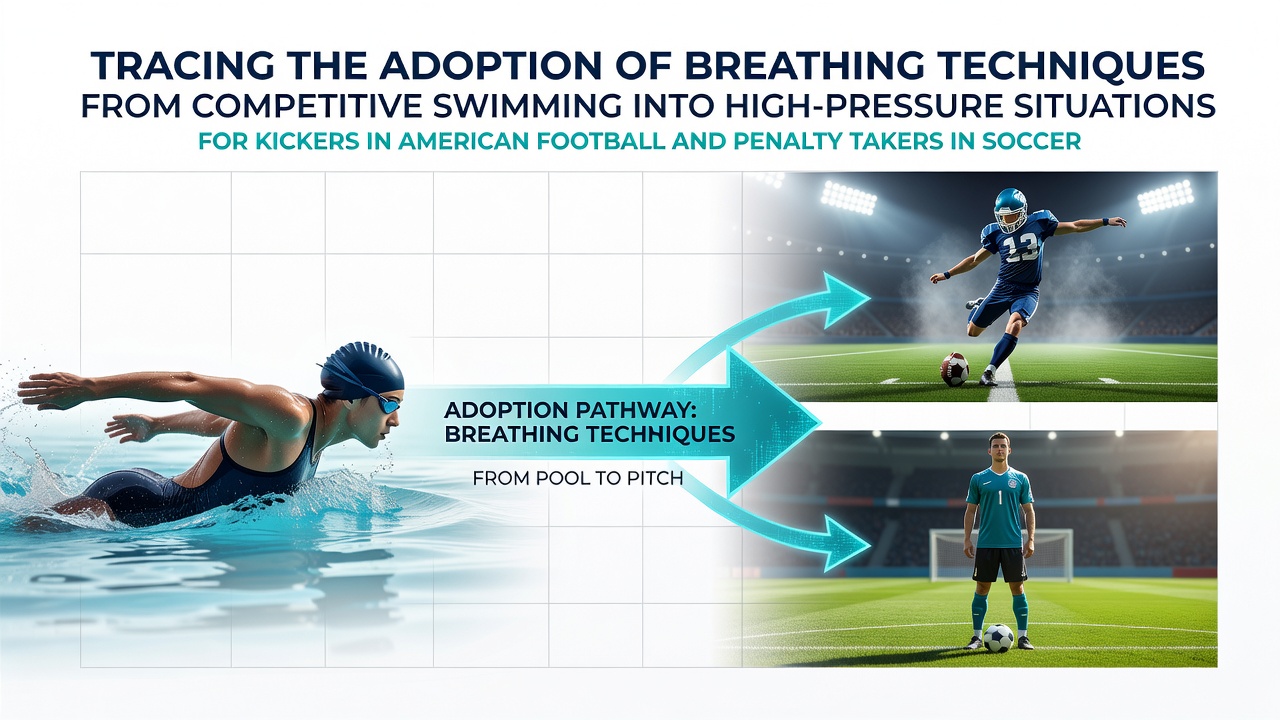
Tracing the Adoption of Breathing Techniques from Competitive Swimming into High-Pressure Situations for Kickers in American Football and Penalty Takers in Soccer
Avery Patterson · Aug 26, 2026
Tracing the Adoption of Breathing Techniques from Competitive Swimming into High-Pressure Situations for Kickers in American Football and Penalty Takers in Soccer
Competitive swimmers have long relied on precise breathing patterns to maintain oxygen efficiency and manage exertion during races, and these methods have gradually found their way into the routines of American football kickers and soccer penalty takers who face intense moments of focus and physical demand. Researchers have documented how breath control developed in aquatic training environments translates to land-based sports where athletes must stabilize heart rates and maintain composure before critical attempts. Studies from sports science programs show that techniques such as diaphragmatic breathing and timed inhalations help reduce physiological stress responses, allowing performers to execute with greater consistency when stakes rise.
Foundations of Breathing Control in Swimming
Swimmers develop breath management through repetitive drills that emphasize timing, volume, and recovery between strokes, which builds the capacity to regulate carbon dioxide levels while sustaining power output. Training protocols at elite programs incorporate breath holds and synchronized patterns that enhance lung capacity and mental discipline, elements that later proved adaptable to other athletic contexts. Data from longitudinal athlete monitoring reveals that swimmers who master these skills often exhibit lower cortisol spikes during competition, a physiological advantage that caught the attention of coaches in other disciplines seeking similar edges.
Integration into American Football Kicking Routines
Football specialists began incorporating swimming-derived breathing sequences in the early 2010s as strength and conditioning staffs looked for ways to stabilize kicking mechanics amid crowd noise and game pressure. Kickers started using pre-kick rituals that include deep nasal inhalations followed by controlled exhales to lower heart rates before field goal attempts, mirroring the recovery breaths swimmers use at turn walls. Performance tracking from professional leagues indicates that athletes who adopted these methods showed measurable improvements in accuracy during high-pressure situations, with metrics collected across multiple seasons highlighting reduced variability in leg swing timing.
Application Among Soccer Penalty Takers
Soccer players facing penalty kicks encounter comparable demands for precision under scrutiny, prompting coaches to draw from swimming literature on respiratory control to help athletes reset their nervous systems before striking the ball. Penalty takers now practice routines that combine brief breath retention with slow releases, techniques borrowed directly from competitive swim training that aim to minimize tremors and improve aim consistency. Observers note that national teams and club academies have integrated these exercises into pre-match preparation, with video analysis confirming steadier body positioning when players execute the adapted methods.
Evidence from Research and Cross-Training Programs
Academic investigations into technique transfer have examined how swimming breath work influences autonomic nervous system regulation in kicking sports, producing findings that support wider adoption across training regimens. Publications in the Journal of Sports Sciences detail controlled trials where participants trained in swimming-style breathing demonstrated faster recovery times between repeated high-intensity efforts compared to control groups. Additional work from Australian sports institutes has explored similar transfers, showing that structured breathing drills contribute to improved decision-making speed when athletes operate under time constraints and external stressors.
Current Practices Observed in August 2026
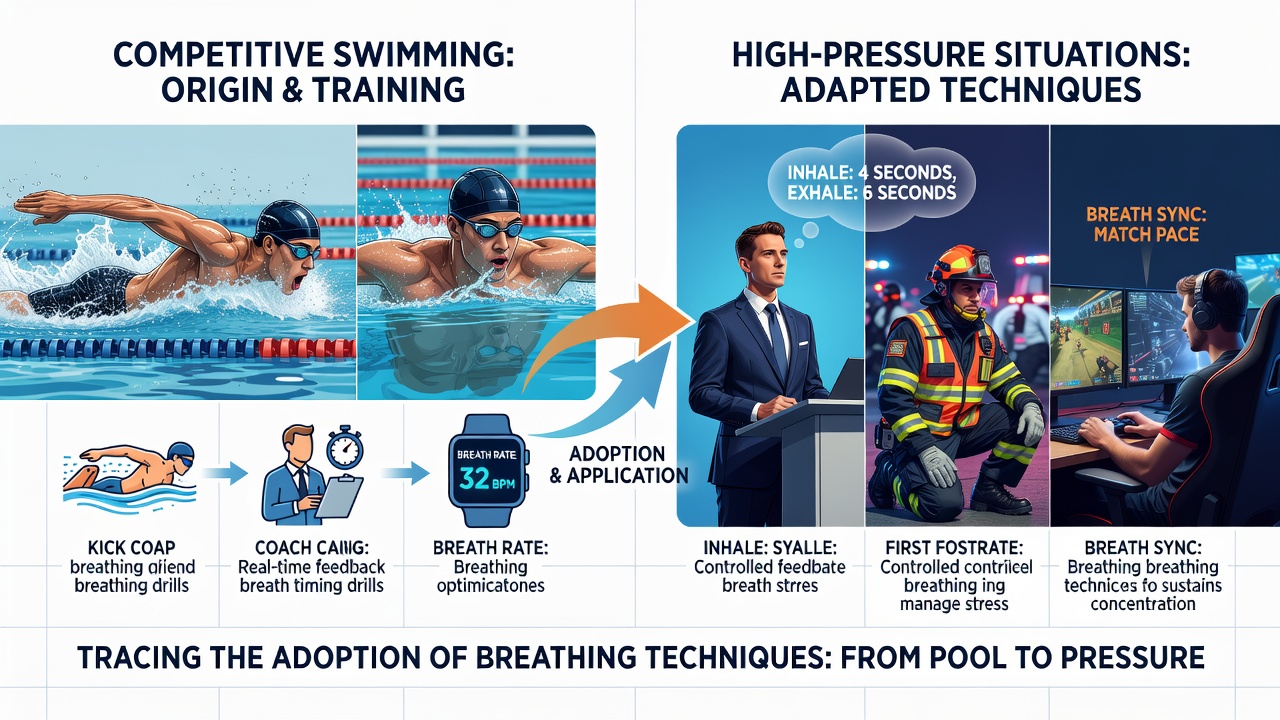
By August 2026 training camps and academy sessions across multiple leagues feature dedicated modules that blend swimming pool sessions with kicking practice, allowing athletes to experience the original context of these breathing techniques before applying them on the field or pitch. Equipment such as wearable heart rate monitors now pairs with breath tracking apps to provide real-time feedback during drills, enabling coaches to adjust protocols based on individual physiological responses. League-wide data compilations reveal that teams investing in these cross-sport integrations report steadier performance trends in late-game scenarios where fatigue and pressure intersect.
Conclusion
The movement of breathing techniques from competitive swimming into football and soccer has followed a clear path supported by physiological research and practical coaching adaptations, with measurable outcomes in accuracy and composure during decisive moments. Continued monitoring of athlete performance through 2026 and beyond will likely refine how these methods evolve within each sport while maintaining their core emphasis on controlled respiration for optimal execution.