Tracking Left-Handed Dominance Across Elite Baseball, Tennis, and Golf Rankings Over Decades
Ben Patterson · Aug 5, 2026
Tracking Left-Handed Dominance Across Elite Baseball, Tennis, and Golf Rankings Over Decades
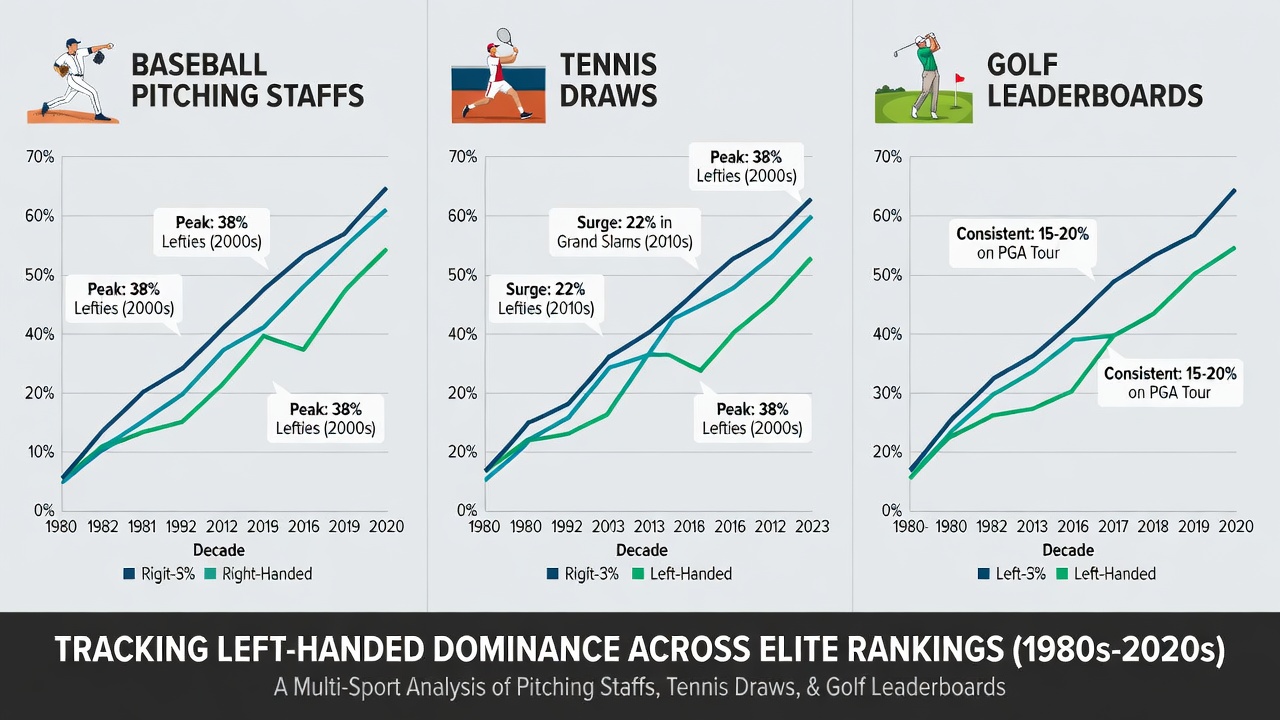
Left-handed athletes appear at rates higher than their roughly 10 percent share of the general population when researchers examine elite rankings in baseball pitching staffs, tennis draws, and golf leaderboards across multiple decades. Data from professional leagues show consistent overrepresentation that has held steady since the 1970s, though the degree of that advantage shifts by sport and era. Observers note that mechanical and strategic factors likely contribute to these patterns rather than any single explanation.
Baseball Pitching Staffs: Decades of Left-Handed Overrepresentation
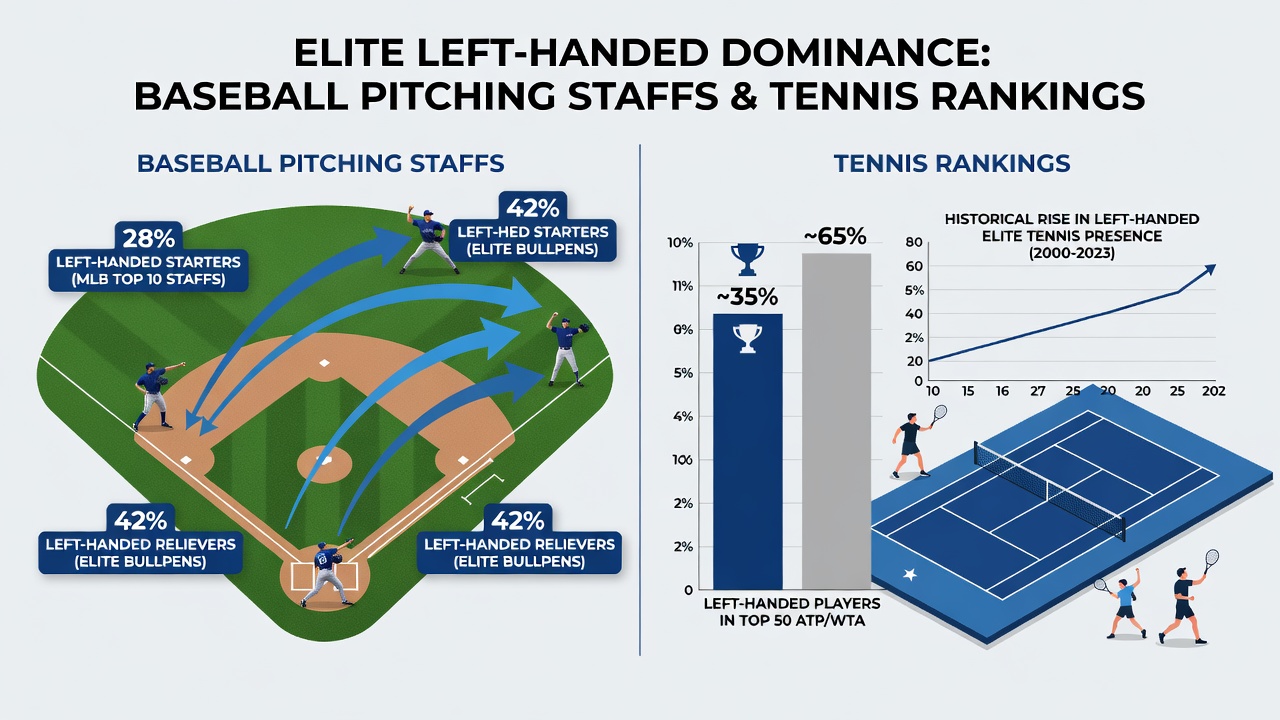
MLB rosters have featured left-handed pitchers at rates between 25 and 32 percent in most seasons since 1980, according to aggregated team data compiled through 2026. This figure exceeds population norms by a wide margin and remains stable even as overall roster sizes and pitching roles evolved. Teams maintain at least one or two southpaws in their starting rotations and bullpens because left-handed deliveries create platoon advantages against right-handed hitters who dominate lineups. Records from the 1990s through the 2010s reveal that World Series-winning clubs often carried higher percentages of left-handed pitching than league averages during those years. As of August 2026, active rosters continue to reflect the same distribution, with left-handers holding prominent spots on staffs across both leagues.
Tennis Draws: Left-Handed Players in Grand Slam and ATP Rankings
ATP rankings and major tournament draws have included left-handed players at elevated rates since the Open Era began, with figures typically ranging from 15 to 20 percent among top-100 competitors in recent decades. Historical draw sheets from Wimbledon, the French Open, and the US Open document left-handers reaching semifinals and finals more frequently than expected given population baselines. Players such as John McEnroe in the 1980s, Rafael Nadal across the 2000s and 2010s, and several current top-50 entrants illustrate the pattern persisting into 2026. Researchers tracking handedness in professional tennis note that the serve and groundstroke angles created by a left-handed grip can disrupt right-handed opponents who face such matchups less often during developmental years. Rankings published in mid-2026 continue to show left-handers clustered in the upper tiers at rates above demographic expectations.
Golf Leaderboards: Steady Presence on PGA and Major Championship Lists
PGA Tour leaderboards and major championship results have featured left-handed players at rates around 12 to 18 percent since the 1980s, a modest but consistent elevation above population averages. Figures from the Masters, US Open, and British Open archives indicate left-handers have secured multiple victories each decade, including notable runs by players such as Phil Mickelson and Bob Charles in earlier eras. Swing mechanics and equipment considerations play roles in these outcomes because left-handed clubs and setups remain less common, yet those who reach elite levels often post competitive scoring averages. Data aggregated through August 2026 shows left-handers maintaining positions inside the top 50 of the Official World Golf Ranking at proportions higher than baseline population figures, though the margin narrows compared with baseball and tennis.
Cross-Sport Trends and Data Patterns Since the 1970s
Longitudinal comparisons reveal that left-handed overrepresentation has remained relatively stable across all three sports despite changes in training methods, equipment technology, and competitive structures. Baseball shows the largest and most consistent gap, while golf displays the smallest elevation yet still exceeds population expectations. Tennis occupies an intermediate position with noticeable spikes during periods when standout left-handers held multiple Grand Slam titles simultaneously. Academic analyses of performance databases, including those published by sports science groups in North America and Europe, indicate that selection effects and tactical advantages accumulate over careers rather than appearing as sudden shifts. Records spanning more than fifty years demonstrate that these patterns do not result from isolated eras or single dominant athletes but recur across successive generations of competitors.
Conclusion
Statistical tracking of elite rankings demonstrates that left-handed athletes maintain measurable presence above population baselines in baseball pitching, tennis, and golf across decades of data. The consistency of these distributions through 2026 suggests structural factors within each sport continue to reward the attributes associated with left-handed execution. Future roster and draw compilations will likely show whether these proportions hold or adjust as training approaches and participant demographics evolve.