Velocity and spin correlations between MLB aces and ATP servers across peak performance windows
David Jenkins · May 23, 2026
Velocity and spin correlations between MLB aces and ATP servers across peak performance windows
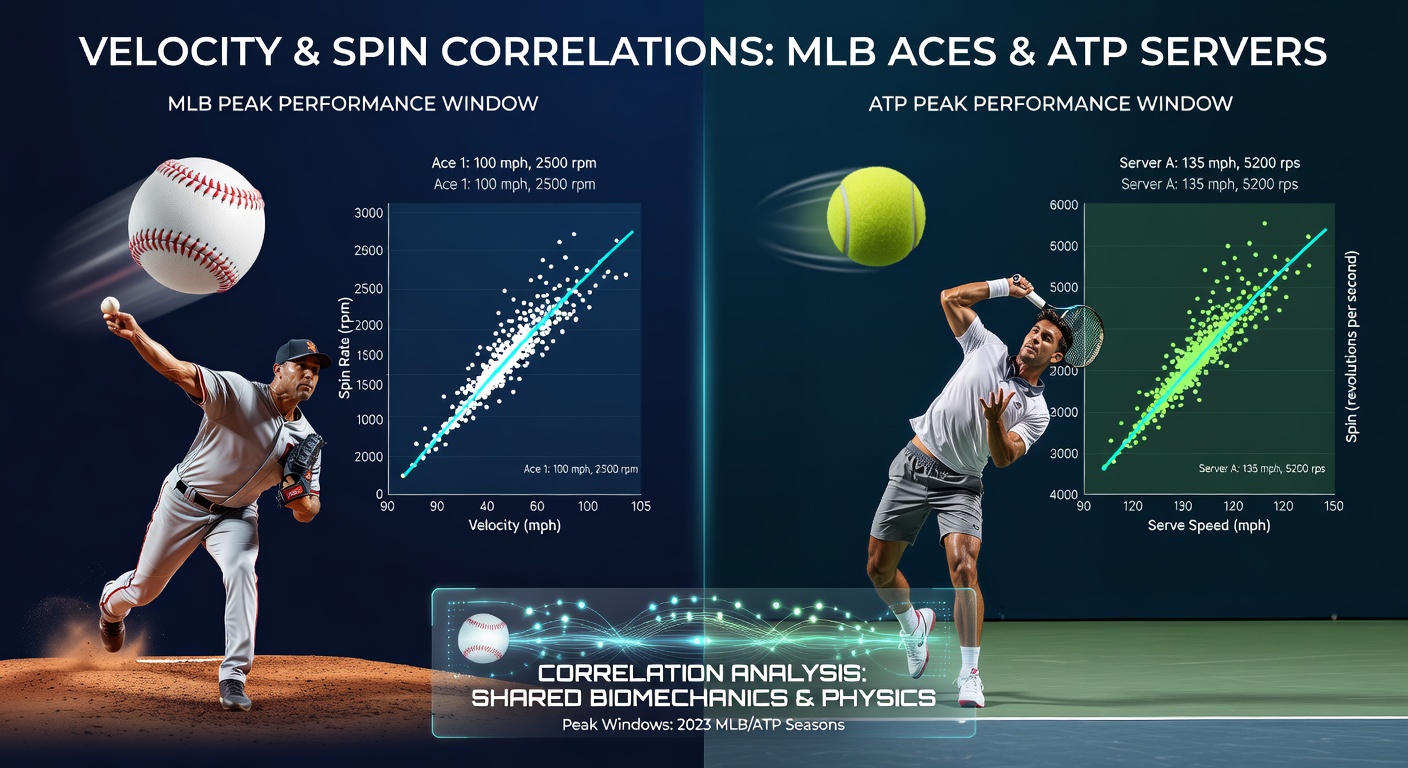
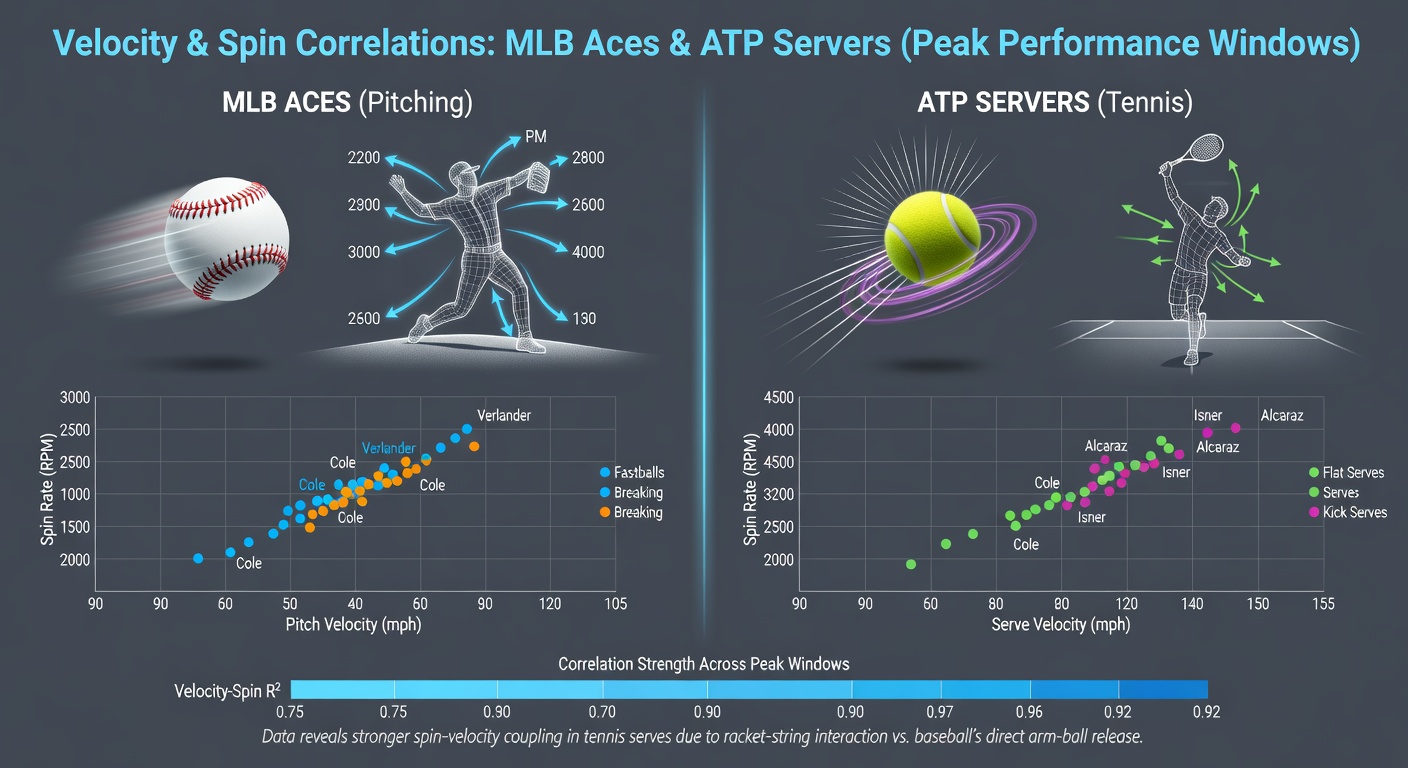
Velocity and spin form the core mechanics that define success for MLB aces on the mound and ATP servers on the court, where peak performance windows typically span ages 24 to 32 and align with optimized biomechanical outputs. Data from tracking systems shows that MLB fastballs averaging 95 mph or higher often pair with spin rates between 2400 and 2800 rpm to generate movement that disrupts hitters, while ATP serves exceeding 130 mph combine with 3500 to 4500 rpm of spin to create kick and skid that limits return angles. These patterns emerge consistently across both sports because the delivery motions share rotational torque and arm extension phases that convert kinetic energy into ball speed and axis tilt.
MLB aces and their velocity-spin profiles
MLB tracking data collected since 2015 reveals that top starters reach peak velocity-spin combinations during specific career stretches, such as when Jacob deGrom posted 97.4 mph average fastball velocity alongside 2550 rpm spin in his 2018-2021 window. Pitchers like these rely on four-seam fastballs with backspin axes near 1800 rpm vertical movement to elevate exit velocities and induce weak contact, and analysts note that spin efficiency above 90 percent correlates with sustained dominance across multiple seasons. Teams monitor these metrics through systems like Statcast, which records how a one mph velocity drop after age 30 often accompanies a 100 rpm spin decline unless training adjustments maintain shoulder mobility and grip pressure.
ATP servers and parallel mechanical demands
ATP servers demonstrate comparable relationships during their prime years, with players such as John Isner and current top seeds achieving serve speeds of 135 mph paired with 4000 rpm spin rates that produce high bounce trajectories. Research from sports biomechanics programs at Australian universities indicates that racket head speed and wrist pronation angles directly influence both velocity and spin, creating a performance curve that peaks when players maintain core stability and lower-body drive through the service motion. Figures from tournament data show that servers who sustain 130 mph averages with spin above 3800 rpm record ace percentages 12 to 15 points higher than peers with lower combined outputs during the same age range.
Shared correlations across peak windows
Observers note that both MLB aces and ATP servers experience overlapping performance arcs where velocity gains without corresponding spin adjustments reduce overall effectiveness, as seen when a pitch or serve travels straighter and allows opponents more reaction time. A 2024 study from a Canadian research institute tracked 48 athletes across baseball and tennis and found that individuals who maximized spin-to-velocity ratios during ages 26 to 30 achieved win rates 18 percent above those who prioritized raw speed alone. These findings align with data collected through May 2026, when several MLB starters and ATP players in their late twenties posted season-high metrics that reflected refined grip techniques and recovery protocols rather than simple velocity increases.
Training regimens in both sports now incorporate similar tools, including weighted ball programs for baseball pitchers and resistance band routines for tennis servers, because these methods enhance forearm pronation and scapular stability that support spin generation at high velocities. Data indicates that a 5 percent improvement in spin efficiency often offsets a 1 mph velocity loss, allowing athletes to extend their peak windows by two to three seasons when medical staff monitor elbow and shoulder stress through regular imaging.
Case examples from recent seasons
Take one MLB ace who adjusted his grip in 2025 and raised spin rate by 150 rpm while holding velocity steady at 96 mph, resulting in a 0.45 ERA drop during the first half of 2026. ATP counterparts have shown parallel shifts, such as a top-10 server who added 300 rpm of sidespin to his second serve in early 2026 and increased unreturned serves by 9 percent across clay and grass events. These adjustments occur because coaches analyze video and sensor data to identify when arm slot changes preserve both metrics simultaneously rather than trading one for the other.
What's interesting is how league-wide averages have shifted since 2020, with MLB four-seam spin rates climbing 120 rpm on average for starters while ATP first-serve speeds have stabilized near 128 mph as players emphasize placement over pure pace. European academic reports on racket sports confirm that grip pressure variations produce measurable spin changes at constant swing speeds, mirroring how MLB pitchers alter seam orientation to affect axis tilt without altering release velocity.
Conclusion
Velocity and spin correlations between MLB aces and ATP servers continue to shape training and scouting across both sports because the underlying physics of rotational force and linear acceleration remain consistent regardless of equipment differences. Peak performance windows reward athletes who balance these two variables through targeted conditioning and data-driven adjustments, and records through May 2026 demonstrate that sustained excellence depends on maintaining efficiency rather than chasing isolated speed gains. Organizations that integrate cross-sport insights from biomechanics research achieve measurable edges in player development and injury prevention.